Category Archives: Spirituality Slice of Life

Empty Messages

Standard

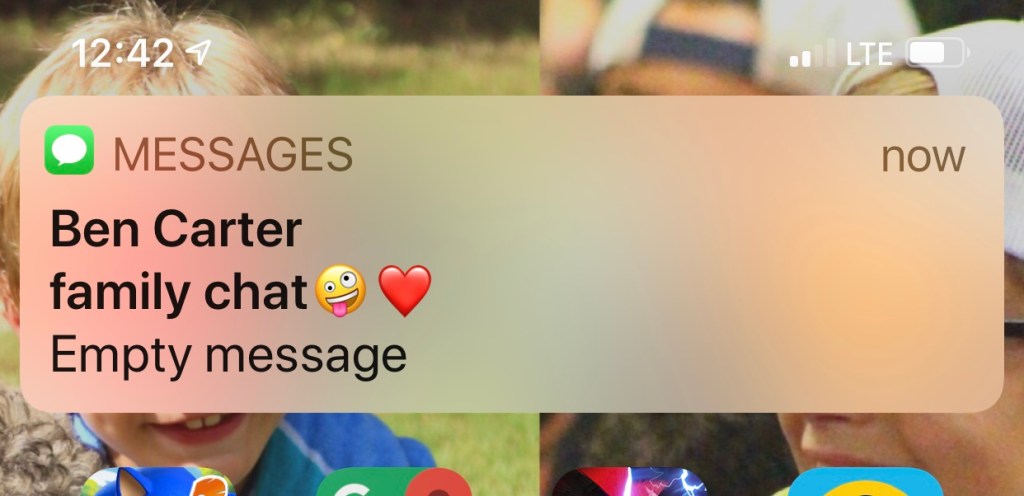
During Covid-19, my family has stayed home together for most of the time.  Ben has worked, all four kids attended online school, and I’ve continued writing.  Even during the summer, we’ve generally remained in our house.  So, we’ve developed a few habits, including one in which we text on a family chat instead of talking face-to-face for every discussion.  It’s easier than yelling for everyone to assemble when we must make decisions.  We yell enough without adding to the noise when a text will suffice.  Usually, the texts are innocuous, like what do we want for lunch?  But a couple of times, someone pushed send before they’d typed any words into the text message.  The texts popped up containing the words, “empty message.” 

I feel like we send and receive a lot of empty messages these days because we talk a lot, but often our words lack value.  Or the opposite is true, we don’t say anything when we could contribute words with significance.  Do we have a worthy purpose in speaking (even if we might upset some people) or are we just talking to stir up people’s negative emotions?  Some of us have spent so much time arguing that we don’t seem to know another way to function in the world.

In a familiar passage, the Bible says, “If I speak in the tongues of men or of angels, but do not have love, I am only a resounding gong or clanging cymbal.”  I Cor. 13:1 (NIV).  Another translation says that if I do not speak with love, “I’m nothing but the creaking of a rusty gate.” (MSG).  Unless love motivates and inspires our words, it doesn’t matter how eloquent the words are or even how truthful.  We can speak clearly and persuasively, but if our purpose is not rooted in love, the words fail to reach the hearts and minds of others in a positive, uplifting way.   

When we do not speak from a place of love, we may speak from fear instead.  We fear being wrong, so we justify our positions no matter what.  We don’t want to feel vulnerable, so we deflect and defend instead of apologizing.  We don’t want to be hurt, so we hurt the other person first with words we can’t take back.  We spew hate because we worry that we will be displaced, become irrelevant, or fear people who may seem different from us.  

Similarly, when we do not speak, we may believe our goal is to keep the peace, but our lack of action may be based on fear, not love, in the face of injustice or unfairness.  We don’t want to be criticized, so we stay silent.  But failure to speak is not only a problem when the words are difficult.  We decline to send a kind word to another out of fear of rejection.   

In order to decide if our words are grounded in love, we must make a habit of taking a moment to assess before we act.  We need to pray and seek God’s wisdom to center ourselves in a spirit of love.  We must examine our purposes and motivations.  If we want to encourage and build up others, let us speak.  When we feel compelled to speak up to avoid silent complicity, let us speak with love to demonstrate that love to the oppressed.  When we feel led to reach out to another in love, we should follow that instinct.  

We cannot allow ourselves to fall into the trap of empty messages that do not serve God’s greater purpose.  God can speak to others through our words and can change hearts and minds if we commit to communicating in love.  God’s love speaks volumes.  May God help us further his love with our words.   

Bruised

Standard

IMG_3085

A lifeguard friend of ours showed up to work at the pool the other day with bruises on his shoulder and arms from his high school football practice.  After I winced at his wounds, I thought of my brother, who coaches high school football in Arkansas.  I recalled a time when he was a kid and his legs were covered in black and blue bruises from football practice.  I texted him to remind him of it, and he told me that little league football was some of the worst pain he’d experienced in sports.  But football is not the only culprit.  My daughter Riley experiences bruising when she dances.  Sometimes a routine involves dropping quickly to her knees, which results in bruising.  At any given time, her toes may be bruised because she’s been dancing ballet on pointe.

We expect bruising in athletic endeavors, but most of us experience bruising in more common, everyday ways.  I run into the footboard of our bed on what seems like a regular basis.  Every time my thigh comes into forceful contact with the edge of said footboard, I think, “that’s going to leave a bruise.”  Of course, I often don’t remember how I became bruised.  I can’t tell you how often I’ve found a bruise on my body and thought, I wonder where that came from.

Bruises may vary in their severity but as far as wounds go, they are on the lighter side of injuries.  The discolorations on our bodies eventually fade.  But the bruises we sustain to our emotional lives are much harder to get over.  Other people may inflict the bruises purposely or accidentally by their words and actions.  We may even bruise ourselves by our own behaviors and thoughts.

The mental and emotional contusions we endure may not lose their power over time.  They don’t automatically fade away like our physical bruises.  In addition, these wounds are invisible to others.  People don’t say, “are you hurt?” because they can’t bear witness to the wounds.  And even if they could see our bruises, they might say, “it’s only a bruise, what’s the big deal?”  But we know the depth and tenderness of the bruises.  We know how badly they hurt and may feel as though we are black and blue all over without anyone knowing.  In an effort to defend ourselves, we may construct internal armor to protect ourselves from further bruising.  We don’t want to feel anything because we might sustain more hurt and pain.

In the New Testament, Jesus “made a circuit of the all the towns and villages.  He taught in their meeting places, reported kingdom news, and healed their diseased bodies, healed their bruised and hurt lives.” Matt. 9:35-38 (MSG).  The last portion struck a chord with me: Jesus focused on healing their bruised and hurt lives, not merely their physical ailments.  And then the passage continues, “When he looked out over the crowds, his heart broke.  So confused and aimless they were, like sheep with no shepherd.”

Jesus was moved to the point of heartbreak for the people he saw around him.  He loved them and believed that the hidden parts of their lives that were bruised and hurt were worth care and restoration.  God loves us just the same.  He doesn’t want us to remain bruised and battered emotionally and mentally.  He can rescue us from being confused and lost.

Knowing that God is heartbroken for us at times and wants change in our lives is a humbling realization.  Our first step is to ask God to begin the process of healing our bruises.  God can take down our defenses and repair the tender places in our hearts and souls.

God loves us too much to ignore us during our pain and loneliness.  Bodily bruises do not heal instantly, nor will our emotional bruises heal immediately.  But God will not leave our bruised lives untouched when we seek his love and care.


Poured Out

Standard

IMG_3040

I’ve always enjoyed the beginning of a new school year.  I love the rush of a fresh start with new school supplies, whether it was for me or my kids.  But this year has been different in many ways: we’ve been home from face-to-face school since March; we start school online for the first several weeks; we may or may not be face-to-face for very long once school starts.  All of that meant that I’d not been looking forward to the start of this school year.  I could barely bring myself to buy supplies until the day before school began.  When I talked about this strange school year with a couple of my friends, we wondered about the ultimate fall out, mentally and emotionally, from dealing with the Covid-19 crisis, in part, because we lacked our normal anticipation and excitement.  In fact, I felt worn down and a little numb.

So, I sought solace by conducting a Google search of Bible verses that dealt with this feeling I couldn’t quite name.  I found Psalm 22, a psalm of David, in which he asked, “My God, my God, why have you forsaken me?” a refrain that Jesus would echo from the cross.  In describing his plight, David said, “I am poured out like water, and all my bones are out of joint.  My heart has turned to wax; it has melted within me.” Poured out –  that felt familiar.

During this crisis, all of us have been pouring ourselves out, day after day, trying to maintain some semblance of normalcy or dealing with the everchanging newness of the situation.   And yet, with all of the isolation and distancing, we are not being filled up with the benefits of friendship, social interactions, or community with any regularity, if at all.  Many of us feel gutted and hollow.

In the Old Testament, a woman tells the prophet Elisha that her husband, who’d been one of Elisha’s men, had died and now his creditors would make her sons slaves to fulfill the debt.  Elisha offered to help and asked what the woman had available in her house.  She replied, “Your servant has nothing there at all, except a small jar of olive oil.”  Elisha told her to “go around and ask all your neighbors for empty jars.  Don’t ask for just a few.”  He then directed her to pour oil into all the jars.  The woman and her sons poured oil into numerous jars until there were no more jars left, which allowed them to pay off their debts and gave them money to live on.  2 Kings 4:1-7.

I feel as though many of us are like the empty jars, all of our energy and spirit poured out waiting to be refilled.  When we lived in Missouri, we occasionally held Services for Wholeness and Healing at our church, First Presbyterian of St. Louis.  Our pastor Reverend Kelly Allen started the tradition and asked if I would help her.  She would stand at one end of the sanctuary and I would be at the other end creating two stations for people to approach, at which time they would offer a specific prayer request.  We would pray with them and then anoint their heads with a small amount of oil.  At first, I hesitated because I felt unqualified to help, but she convinced me it was okay.  I’m so glad I participated because it was powerful and moving to pray with people regarding their personal situations, to know they were entrusting me with their needs, to stand in the gap between them and God and speak on their behalf.  Those connections were life affirming for me.  Placing the symbol of the cross in oil on their foreheads was a way to reassure them they were not alone in their pain or sorrow or seeking.

We may feel empty at times, especially as of late.  But God has the ability to fill us with his spirit until we are overflowing again.  However, God may depend on us to help.  Even when we cannot be together physically, we need to make efforts to fill one another up with love.  We can reach out to let others know they are on our minds.  Sometimes, a simple text is all it takes to reassure another that they are not forgotten, that they matter, that they are understood.  None of us are perfect at lifting and encouraging others, but if we all take responsibility to perform small gestures with regularity, what a difference we might make for others.  In turn, we might also find our vessels being filled.  Then maybe when we can gather again physically in our chosen groups, we will not return depleted but rather with a new-found spirit of connection and love.

Let us pour out love and empathy to fill others’ hearts knowing God will empower us to help them and will also heal us from the emptiness we may experience in these challenging times.


“Would You Rather?”

Standard

IMG_2994

My eight-year-old son Alex loves to play the game “Would You Rather?”  He presents two alternatives and then asks anyone who will listen which they would prefer.  Every mealtime and oftentimes while hanging out at the pool, Alex likes to offer his questions, which tend toward the crazy and fantastic.  For example, assuming you could survive, would you rather live in a volcano or in the ocean?  But then my eleven-year-old son Clay turned serious and asked, “would you rather change the past or know the future?”  This proposition instantly increased my angst.

My automatic answer was to know the future, but I realize others might answer differently.  Intellectually, I know this is a futile dilemma.  We can’t change the past no matter how often we relive the memories or how hard we wish we could alter the actions of ourselves or others.  We can’t have do-overs, and yet we continue to rethink what we would’ve said or could’ve done.  We analyze all of the details and rearrange the pieces in our heads.  If only this had occurred or if only that hadn’t, we believe things would’ve been better for us.  We can get stuck in the past in our efforts to erase the pain and hurt.

As far as the future, we can spend massive amounts of time and energy worrying about how things might turn out.  We end up living with constant stress because of our inability to predict the future.  Sometimes, our desire to manufacture the outcomes we want can cause high levels of anxiety for us and others.  Many circumstances are completely out of our control, and we cannot orchestrate people to behave the way we want without being manipulative and condescending.  We want so badly for everything to turn out perfectly, but perfection is not a real possibility.  Our yearning to avoid emotional harm can cause our hearts and minds actually to ache.

Even when we pray and invite God to be present in our situations, it’s not always obvious which decisions we should make.  While we can try to follow God’s plans, there is no guarantee that we can figure it out successfully.  We must pray and seek God and then make the best choices as we understand them.  Sometimes, searching for God’s guidance has been difficult for me.  I want to make the “right” decisions, and as a result, I end up praying in a stilted and stifling way.  I find myself afraid to tell God what I truly want because I’m not sure if my desires line up with God’s.  When I do tell God what I honestly want, I tend to back up and quickly say, “but your will be done,” almost as a disclaimer.

Being dishonest with God though is a ridiculous proposition.  He knows us thoroughly and deeply and knows when we are being truthful with our whole hearts laid out before him or not.  Fear of failing God and myself in the future are not good excuses for hiding my true and authentic self from God in the present.

So, I’ve decided that I’ll follow Alex’s way when faced with life’s “would you rather” questions.  I will try to be upfront with God and make my preferences known.  When I pray, I’ll say, “if I’m being honest, this is the way I would rather things turn out.  But, if things don’t work out the way I’d like, then I’ll need your help to deal with how life plays out in reality.”  When we face our “would you rather” dilemmas, I truly believe that God “would rather” we be honest, authentic, and vulnerable and trust that God is with us no matter what.


Leap of Faith

Standard


IMG_2915 2

At the start of summer, we rushed back to the pool to get my son Alex, who was seven at the time, swimming again before he went to camp for the first time. He’d almost mastered swimming last summer, but we knew he needed practice to feel comfortable again.  Alex always had some anxiety and fear regarding the pool and swimming even with all of the lessons he’d had.  After a few days though, when he was swimming and jumping off the diving board again, he declared that “it took a leap of faith” for him to get back into the swim of things.

But there was another little girl, about four years old, who was having a much harder time taking the leap.  She stood on the end of the diving board in her pink swimsuit with a lemon print and bounced.  She wanted to jump, and she was prepared with floaties on her arms and chest.  Her parents and brother encouraged her from the sidelines, but all she could do was bounce.  She got down and then tried again.  Up and down several times.  One of the lifeguards who was not on duty generously jumped into the pool and treaded water below the diving board.  The lifeguard provided assurance that she would catch the girl or be right beside her if she required help.  But the little girl didn’t know the lifeguard well.  She bounced and bounced, but I didn’t see her jump into the pool that day.

At the time, I told my daughter “there’s a metaphor here,” but I didn’t see what the metaphor was until I revisited the situation.  I saw the little girl and thought about how scary it can be when we want to take a risk.  It’s so frightening when we cannot see how deep the water is; when we are afraid we’ll sink instead of swim; when we don’t know how long we’ll be in the deep before we make it safely to the edge.  Even when we’ve prepared and planned, we may be paralyzed by the decision to jump.  We bounce, back away, try again, and wait, wondering if the risk is worth the reward or possibly the heartache or failure.

I was consumed with my kinship with the little girl, but I completely forgot about the lifeguard in the water.  The lifeguard who offered calm, who was ready to give assistance or rescue if needed. The lifeguard who was already in the water waiting for the girl to jump.  But because she didn’t know the lifeguard, she couldn’t trust the lifeguard.

God is the lifeguard, already in the deep, waiting for us to be vulnerable. For us to either take a baby step off the diving board or take a running jump and make a huge splash with a cannonball. God is there to offer assurance, comfort, help, or rescue.  But if we don’t know God, if we don’t spend time with him, we won’t trust that God is going to catch us.  Praying, worshipping, singing, meditating, reading the Bible, and being in community with other believers will help strengthen our bonds with God.  If we don’t invest in our relationship with him, we will not learn to trust him.  Then, we may never take any of the risks in life that make it so rich and worthwhile.

Leaps of faith are hard.  The better we know God, the more we will trust him to help us when we take the plunges that we want and need to take.  So, let’s dive in knowing God is our lifeguard, who loves us and is there to save us.


Thread the Needle

Standard

IMG_2849

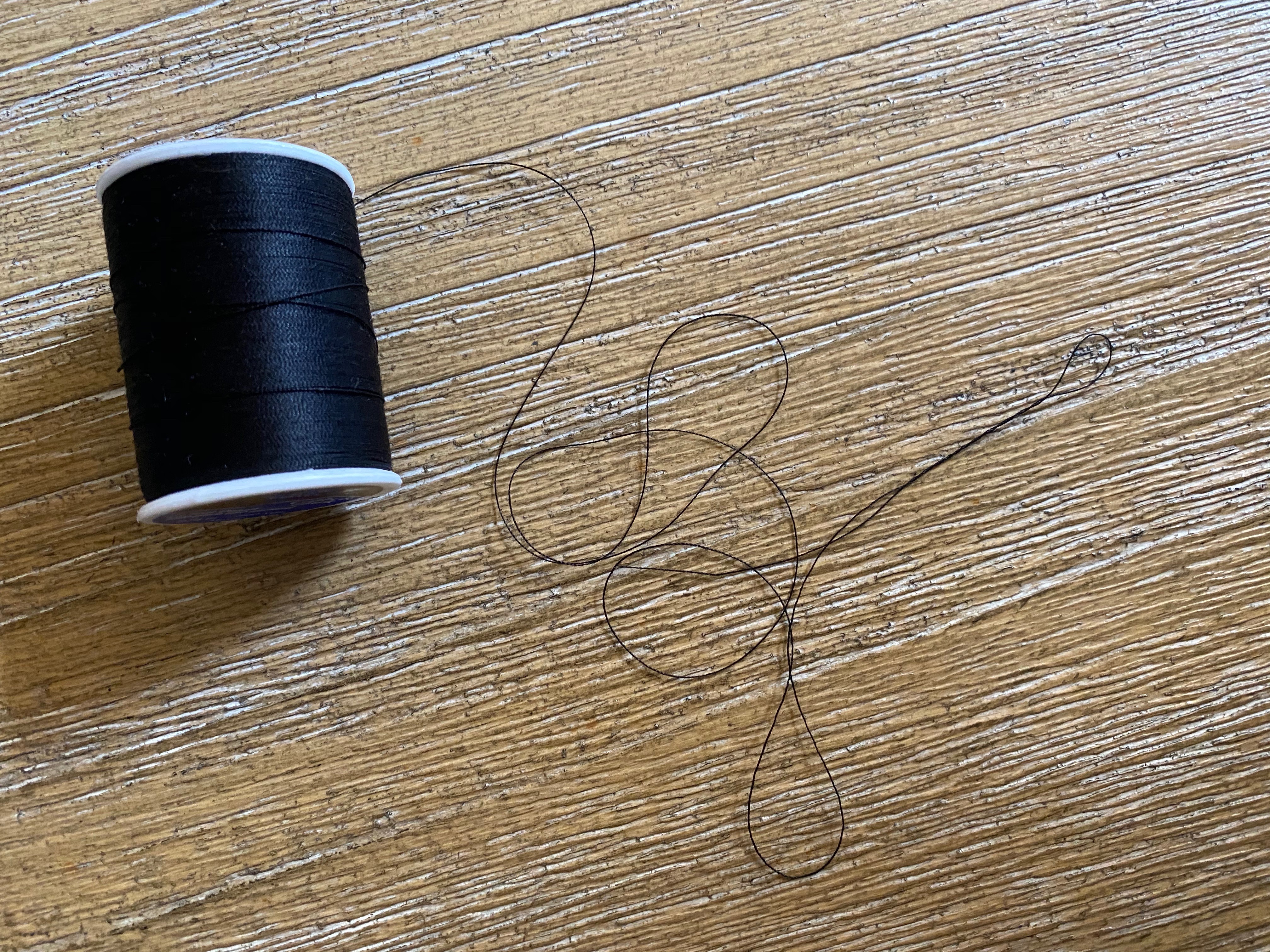
Before the kids left for camp, I noticed that my son Clay’s favorite swim trunks had a seam that needed reinforcement.  I didn’t want it to come undone when he was away swimming, jumping, and diving every day. So, I got out a needle and thread, but I struggled to thread the needle.  I put my bifocals on and still couldn’t see well enough to get the thread through the eye. I recalled my mom handing me her thread and needle when I was a teenager and asking me to thread it.  Now, I knew why.  Without a needle threading tool, I couldn’t see my way to thread the needle.

When the kids came home from summer camp, a Covid outbreak shut down the remainder of the summer camp season and put us in a fourteen-day quarantine.  Our entire family has generally stayed home during these past few months of the Covid crisis.  Ben works from home, the kids did online school, and I was at home as usual. But when summer came before the kids went to camp, the kids and I retreated to the pool almost every day because we could be outside there and still socially distance from others.  When we had to quarantine due to our camp exposure though, we couldn’t go to the pool or inside anywhere.  While thankful that we did not suffer any symptoms, our emotional states rode quite a roller coaster.

We felt a bit claustrophobic.  We struggled mentally – we knew we had to do the right thing and stay away from others, but we were not accustomed to the resulting stir craziness.  We shed some tears and yelled a bit more than normal.  At times, I felt as though our efforts to maintain balance were akin to trying to thread a needle.  And yet, it was hard to see a way to do it successfully.  Difficult to establish harmony and navigate our strong personalities and opinions.

Certainly, we’re not the only family, organization, or community that has found it hard to thread the needle this year.  We’re all dealing with more tension and stress than in normal times, and the anxiety it breeds differs in so many ways.  Our vision is obscured and blurry.  We can’t see the future with any sense of clarity.  The more we concentrate, the less focus we have.

We cannot bring peace to our immediate circles when we’re feeling unsettled ourselves.  We cannot successfully keep everyone around us calm without support.  But if we look to God to center our hearts and minds, we will find help for ourselves so that we can then help others.  God is like the ultimate needle threader.  By seeking God’s vision for our lives, we can better see how to thread the needle and bring cohesion to our families and friends.

I’ve worn a bracelet this summer that reads “be still” in reference to the verse from the Psalms, “Be still and know that I am God.” Psalm 46:10.  This statement has always given me relief.  Even more so now.  We don’t have to figure everything out.  We don’t have to control everything or everyone (we can’t anyway).  We don’t have to do any of this by ourselves.  We can lean on God for comfort.  If we focus on God, we will have guidance and reassurance.

My vision doesn’t give me the capability to thread the needle easily.  In fact, my view of things may make it impossible.  Even though we may lack a clear picture of what comes next, we can depend on God to bring a sense of peace to us and those around us. God will help us see how to thread the needle as we make our way in these uncertain times.


Authentic Voices

Standard

IMG_2772

When I was a child, a pastor visited our church accompanied by his son who was also about my age.  The boy, who had a slight speech impediment, sang a song for the congregation.  Later that afternoon at home, I began to the sing the same song.  Just as I would’ve tried to copy the singing style of someone on the radio or television, I mimicked how boy sang it, speech impediment and all.  I wasn’t trying to be mean.  That’s the way I’d initially heard the song and therefore believed it was the right, and perhaps only, way to sing it.  I distinctly remember that upon hearing my copycat version of the song, my father said, “use your own voice.”  But I honestly didn’t know what he meant because I thought I was singing it correctly.

Only later as I grew older did I begin to understand my dad’s advice, and I’ve spent a long time since trying to find and use my own voice.  And that’s not always been easy.  Over time, my fashion sense has changed, my career aspirations have differed, and my beliefs have evolved.  I’ve strived to become more authentically myself.  I’m still a work in progress and always will be.  But I’m closer to my truth now than I’ve ever been, so at least I’m going in the right direction.

I’ve tried to impart to my children the importance of maintaining or finding their genuine selves.  That when they can be completely themselves with other people and those people accept and embrace them for who they are, they’ve found their special people, whether they be friends or significant others. Pretending to be someone else or hiding your true self is exhausting and ultimately unsustainable.  Convincing young people that being true to themselves regardless of the consequences to popularity or inclusion is difficult.  I certainly didn’t understand that when I was young.

In Romans, the apostle Paul writes that we all have “different gifts, according to the grace given to each of us.  If your gift is . . . serving, then serve; if it is teaching, then teach; if it is to encourage, then give encouragement; if it is giving, then give generously; if it is to lead, do it diligently; if it is to show mercy, do it cheerfully.” Romans 12: 6-8.

I read these words and hear God telling us to be ourselves.  Not grudgingly or with resignation.  We need to embrace the truth of who we are – of who God made us to be.  He created each of us to be unique with various personalities, talents, and traits. When we do things the way others do them, without digging down to know if that path feels genuine to us, we deprive ourselves from living with authenticity.  We also diminish our communities and the world because they need us to be real and whole.  Let’s stop wasting time trying to be someone or something we’re not.

Sometimes these days when I’m singing along to the radio, I catch myself trying to copy the singer exactly.  But the world is already acquainted with the voice on the radio, and it doesn’t need another copycat.  God wants me to use my voice in the ways he’s gifted me.  He wants that for all of us.  He needs all of us to tap into our voices, our gifts, our authentic selves and share with the world.  In that way, we are all more comfortable and grounded in our lives, and the world benefits from the people God created us to be.


Who Do We Look Like?

Standard


IMG_2655

In our family, this is how our physical traits break down.  Our daughter Riley (16), son Jed (14), and son Alex (7) favor Ben with brown hair and brown eyes.  Our son Clay (10) is the outlier of the kids because he looks like my side of the family with blond hair and blue eyes.  Recently, Clay and Ben were out together during dinner time.  The rest of us were eating at home when Alex said to Riley and Jed, “You two look alike, and I look like Clay.”  Riley, Jed, and I stared with mouths open at Alex.  All three of us said, “no you don’t.”  We informed Alex that he looked almost exactly like Jed, especially when Jed was younger.  We told him that he didn’t look like Clay at all.  Alex got up and went to the mirror.  He came back to the table, shrugged,  and said that he guessed we were right.

We laughed at Alex’s conviction that he and Clay looked alike and his willingness to change his misperceptions once he was told differently.  I don’t know why Alex was mistaken.  Maybe it’s because he spends most of his time with Clay – they play together constantly.  Alex is always looking into Clay’s face.  In some ways, it’s like Clay is Alex’s mirror.

I started thinking about how we settle on our perceptions of ourselves.  We have the regular mirrors that reflect our images back to us.  Sometimes they seem more like fun house mirrors because we focus on certain features and distort their significance.  Now, we have the predominance of selfies as well, usually posted on social media. Those photos that are curated, filtered, stylized, and modified.  We thought we had it bad when only the fashion editors possessed the tools to edit, trim, and enhance.  Everyone has the same abilities these days, and we use them with wild abandon.  And it’s not just our images that we skew on social media, but our whole lives made pretty for others to see without any of the difficulties.

We also see ourselves through other people’s eyes.  We see how people look at us and how they react to us.  Sometimes, we tell ourselves stories about what the other person must think based on a glance or a stare even though we may not have actual information to back up our assumptions. In addition, we gauge our worthiness based on the reflections we see from those who know us well.  If the people in our lives treat us with respect and love, we have a better chance of feeling that way about ourselves.

While positive treatment doesn’t always translate into our feeling worthy, negative treatment will shape our self-images in mangled and warped ways.  Often, we feel we deserve to be treated negatively because we’ve adopted the harsh opinions of others as our own.  The mirrors that others provide to us are not always trustworthy or accurate, but it’s hard to reject the perceptions of those that reject us.

On the other hand, God’s vision always provides authentic and true revelations of who we are.  God loves us – simply and unconditionally.  No matter what we’ve done or what we believe about ourselves.  When we shift our focus to God’s eyes, we will see love, pride, hope, and kindness shining back.  God sees our beauty, our flaws, our brightness, our darkness, and all the while he wants us to know that he values us.

We cannot depend on the mirrors on the walls or the reflections that other people provide to establish our pictures of ourselves.  But if we concentrate on how God sees us, we may be able to reevaluate the way we view ourselves.  We may learn to love and appreciate ourselves a little more.  And God would love that.


Loose Thread

Standard

IMG_2595

This summer, I’ve renewed my love of the skort.  It looks like I’m wearing a skirt, but there are shorts underneath. It’s basically a miracle piece of clothing. Anyway, I pulled on a skort the other day and felt something brush the back of my leg.  I was a little flustered but didn’t think too much about it.  Then, I bent over to pull on my sandal.  When I stood up, I felt like I was being pulled back down.  That was when I realized that a thread from the hem of the skort had run down my leg and was now under my foot in my shoe.  I pulled the sandal off, grabbed scissors, and clipped the string.  Problem solved with respect to the skort, but that errant thread mirrored a bothersome train of thought that had been dragging me down, threatening to unravel my peace of mind.

In my herculean efforts to protect my sixteen-year-old daughter from rejection and hurt, I found myself pressuring her to take actions that differed from my experiences in my teens and early twenties.  When things didn’t go her way, I would hurt, but not just for her.  A visceral pain bubbled up.  At first, I thought I could brush away what was troubling me.  But then I unearthed a strong thread made up of my own rejection and hurt that had woven itself around my heart because I’d never truly dealt with it.  I began dwelling on friendships that failed; boys who broke my heart; job opportunities that fell through; publishers that didn’t want my writing; and on and on.  I cried more than I had in a long time.

I wished I could take a pair of scissors and cut that cord completely so that it would no longer trouble me, but an easy fix was not possible.  I discovered that this strand of unworthiness was embedded in my mind and heart more than I’d ever realized.  I couldn’t untangle my thoughts from the past and their intrusion into the present.  I knew that I couldn’t ignore the strangle hold of this particular string any longer.  I read a spiritual book on rejection.  I talked to my therapist.  I prayed asking God to help me with this burden.

Throughout this process, I realized that I still questioned God about why particular things had turned out as badly as they had.  Even though in most cases, in the end, everything ultimately worked out for the best, I still felt that God denied me in certain ways.  That God said no because I wasn’t up to par or because I couldn’t discern his will in the circumstances.  That God himself had essentially told me over and over that I was not wanted.  It’s quite enough to be rejected by people and institutions, and quite another to feel you’ve been rejected by God.  And that cord wrapped around me might have contained more than a little resentment toward God.

But then, something shifted.  A new thought dawned on me.  Instead of God being perfectly fine with my numerous rejections, I wondered if God might have been upset for me, along with me, when I was rejected.  Like in the distant past when the boy with whom I’d been spending a lot of time said he didn’t have feelings for me beyond friendship, was God angry and agitated on my behalf?  Because that was certainly how I felt.  Perhaps God thought I’d been wronged as well.

I don’t assign wrongdoing to God when bad things happen to other people, like illness or natural disasters.  When it came to my personal experiences though, I always tried to figure out why God thought I was wrong, had failed, or was less than.  I made the mistake of laying responsibility for my rejections at God’s feet.  But what if God wasn’t trying to punish me or teach me a lesson every single time I felt rejected?  When I concentrated on God’s loving nature and ventured to trust that he was on my side, my perspective began to change.  I started to rethink the way I viewed the past and my heart began to feel less constrained.

I’m not saying that everything is now perfect.  I don’t believe I’ve cut the string so that it no longer binds me at all.  But the oft quoted verse, “If God is for us, who can be against us?” took on new meaning for me.  Romans 8:31. If I can believe that God stood with me in those times of rejection, feeling the pain as I did, then I can start to reclaim my worthiness.  I feel that God showed me how to gradually loosen the thread of the past’s hold on me.  God was with me then, and God is with me now.  Caring for me, suffering with me at times, and leading me to a place of eventual healing.


Lessons from Hamilton

Standard

IMG_7566

One of the few good things to come out of 2020 so far is that Disney decided to release the filmed version of the Tony award winning musical hit Hamilton featuring the original cast on July 3.  I was lucky enough to see Hamilton on Broadway in November 2015 when I traveled to New York with a group of writers.  Earlier that summer, my friend Stephanie suggested we buy tickets to a show about Alexander Hamilton, the Revolutionary War, the Constitution, and the other founding fathers of America.  So, I bought a ticket for less than $100 and was shocked as the show debuted and skyrocketed in popularity before our trip.  I determined that I wasn’t going to like Hamilton just because of its critical acclaim – I intended to make up my own mind.  But from the opening notes, I knew I was witnessing something new, innovative, and groundbreaking.

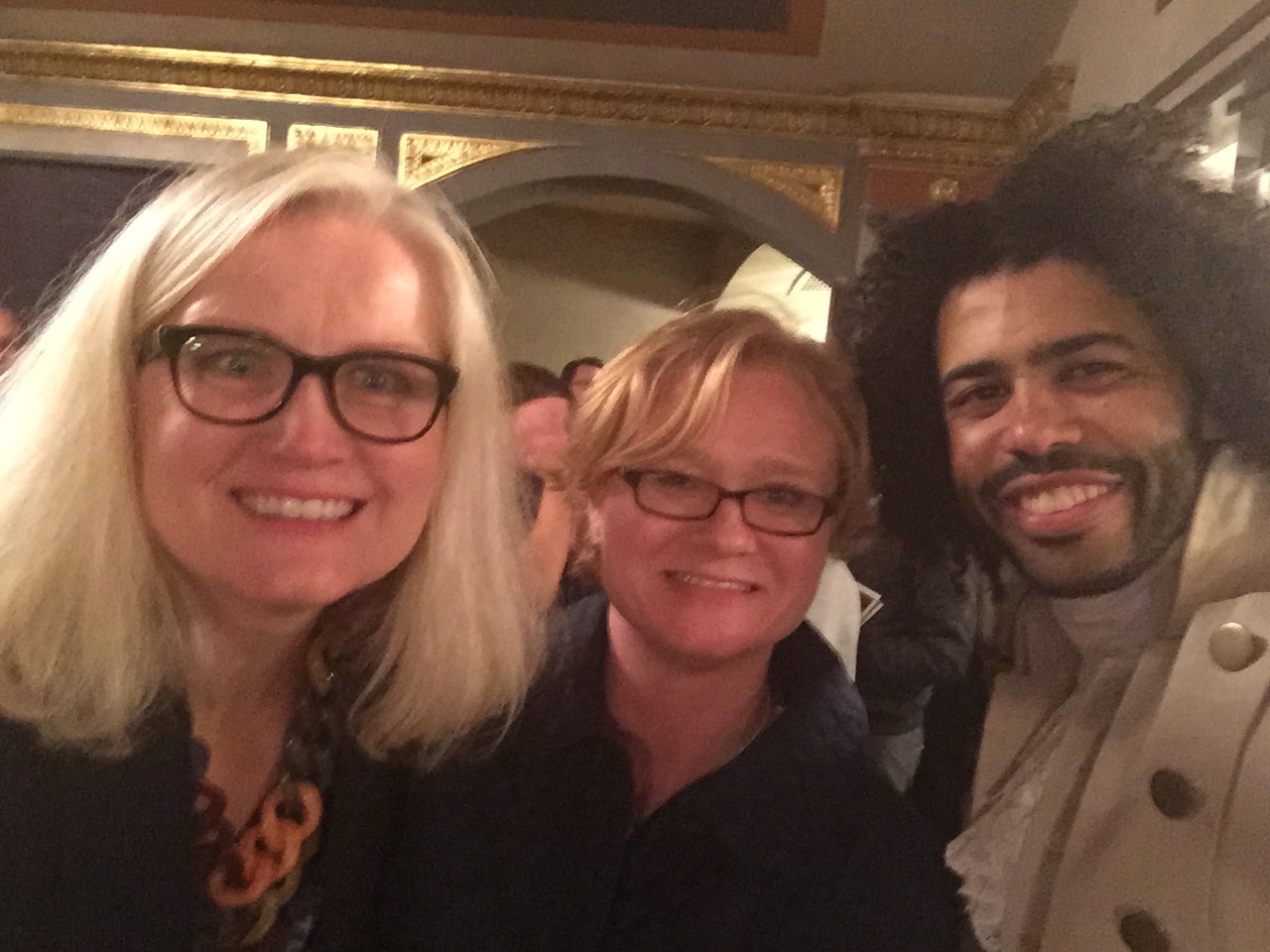
I love the musical Hamilton for many reasons, including the fact that my friend Heather and I snagged a photo with one of the stars, Daveed Diggs.  But one of the reasons is because it portrays imperfect men grappling with tough decisions about national debt, governance, slavery, and how to proceed in war and in peace.  Not all of the founding fathers agreed about the way to do things. We often take the way in which our nation works for granted, but they didn’t because they were creating it as they went along.  And Hamilton shows us that we as a nation have a responsibility to continue to evolve and change.  The proponents of the Constitution wrote a foundational document that still breathes and expands as the nation grows, changes, and as we become more enlightened as people and society.  America is a promise that we must continue to live into – striving to become a more perfect union always.  We cannot just look back and long for good ole days that were not good for everyone.

Much the same is true for Christianity.  Some Christians use the stories in the Bible to portray a God that is ancient, stagnant, wrathful, and judgmental.  The Bible has been used to uphold some of the most abysmal and systemic horrors in our history.  But I believe the Bible is a foundational series of documents that guides us by demonstrating God’s loving nature.  God is not static but is active and alive in our lives and our world today.  We cannot stick God in a box of our own limited understanding so that the powerful remain privileged and the poor and downtrodden remain weak.  God works constantly to bring justice and fairness to all people throughout the world. He expects us to open our hearts and minds to his love and to his people.  He wants us to mature in our faith so that we can better demonstrate his love in our communities, our cultures, and in our countries, including, but not limited, to America.

Nationalism and patriotism are not religions.  And while I believe in the separation of church and state, I also believe that God is the overarching deity to whom we owe our allegiance.  We can argue and debate the ways in which our faith influences the course of our society, but we must pray and invite God into the process as opposed to treating God as a relic of the past.  We must continue to expand our understanding of God, who is loving and inviting, and then use that knowledge to inform how our country and our world can become ever more inclusive, fair, and just.