For the Record

Standard

Several years ago, I was watching the news and as usual, I made my opinion known. Loudly. My son Alex, who was probably nine at the time, pulled his headphone off one ear and asked, “are you yelling at us or the tv?” I answered, “the tv.” He nodded and let the headphone drop back onto his ear. All that to say, my four children know where I stand on most political issues. They understand that I appreciate discussion, debate, and nuance. Even though I haven’t practiced law in eighteen years, the attorney in me still exists, and one of my favorite phrases is “for the record.” In this year of 2024, when I feel like our country is at an inflection point that could affect our lives for generations to come and the world at large, I need to express at least some of what I think and feel so that my future grandchildren that I hope will exist someday know where I stood at this moment in history. I am a suburban, white, married mother of four, Christian homemaker in Texas, and in this fall’s election, I am voting for the Democratic ticket of Vice-President Kamala Harris and Governor Tim Walz.

I know that many Christians believe that they must vote Republican in order to be faithful. But I am here to let you know that there are many progressive Christians who vote for Democrats. Progressive Christians who are welcoming and affirming, concerned with social justice, and want people to know that God loves them no matter what. Often, abortion is the main issue that Christians say dictates their vote. Let me be clear, I don’t want any woman to ever face the difficult decision of whether to have an abortion. I want them to have low cost or no cost birth control pills available over the counter so they can access them without seeing a doctor and without letting their partners dictate whether or not they use birth control. I want them to know that the government will help support them and their children when they are in dire straits economically and in other ways. But I am terrified for the women who have nonviable pregnancies who cannot get the healthcare they need. I had two miscarriages. One at 8 weeks. One at 16 weeks. I was heartbroken and grief stricken. In both circumstances, I had to undergo a D&C. The second miscarriage occurred after I’d made it through the first trimester and the accompanying morning sickness. Everything was fine until it wasn’t. I remember pouring my words onto the pages of my journal telling God how I was crushed in spirit. In the couple of days before I had my procedure, I felt like a walking graveyard because my belly protruded like a mound and my baby was dead. If I’d had to wait until I became physically ill, or worse on death’s door, or had my case go before a hospital board to obtain the procedure my doctor knew I needed, I cannot imagine how my mind, body, and soul would’ve suffered or been wrecked. Or how my older children would’ve been scarred if their mother didn’t survive. I don’t want my daughter or my sons’ future mates to face death or infertility because they can’t get the healthcare they need if they face similar circumstances. 

But I’m not just worried about my kids when they grow up and are making decisions about their families. I’m concerned everyday about their safety out in the world, and especially at school, a place where they should be the safest. I know that the first graders who were murdered at Sandy Hook Elementary should be freshman in college. My son Jed is a freshman in college – he was in first grade when the Sandy Hook children were killed. The list of school shootings in the United States is long. Long and filled with the names of children whose lives were cut short, whose parents are devastated. The number one killer of children is guns. That is unfathomable to me. Yet, we do nothing. Absolutely nothing to protect the children who already exist in our world. Many gun rights advocates and the judges they’ve helped appoint have twisted the meaning of the Constitution to support their view that they should have unfettered access to any gun or as many guns as they might ever want. I’m disgusted by the Republicans who will not vote to enact reasonable gun laws even when the majority of Americans, both conservative and progressive, want them to do so. That is not pro-life. 

I also need to say that if Donald Trump is elected again, I am desperately concerned that our democracy could be at stake. When I went to Rome in September of 2016 before he was first elected and heard about the 400-year Roman Empire that fell, I realized that we still are a baby nation in many ways. If we allow Trump to ascend to the highest office in the land again, I’m afraid we won’t have a democracy left in four years. That he won’t give up power. That our government institutions will be ravaged. That our diversity will be destroyed. That we will become an autocracy whose leader is amoral, unethical, willfully uninformed, uninterested in serving the least of our society, vindictive, and downright mean. The Republican Party should have abandoned him on January 6, 2021, when he tried to foment a coup. I’ve read Liz Cheney’s book “Oath and Honor: A Memoir and a Warning” about January 6th, and Trump did much more than give a speech. It is truly frightening that we came that close to the destruction of our country’s system of government. 

The United States is not immune from being ruined by people who claim that God loves us more than God loves the rest of the world. Some Christians think they are ensuring we are a godly nation while casting aspersions on the very people God loves who are poor and downtrodden, who may believe in God through a different path, or may have a different skin color or way of being in the world than themselves. To be clear, they do not speak for all Christians. In fact, many of us see Christian Nationalism as an abomination that God does not condone or celebrate. When asked what the greatest commandment was, Jesus answered, “‘Love the Lord your God with all your heart and with all your soul and with all your mind.’ This is the first and greatest commandment. And the second is like it: ‘Love your neighbor as yourself.’” (Matt. 22:37-39). I for one believe that Jesus meant those words. 

I will demonstrate both my love of God and my love for neighbor by voting for the Democratic ticket this fall. I pray other Christians will do the same. So, for my grandbabies who will not exist for years to come, this is what was on your grandmother’s heart and mind less than a month before the election of 2024. I hope you’re reading this at a time in the future when the United States is still a beacon of freedom and justice in the world. I just wanted to let you know where I stood – for the record.   

The Privilege and Pleasure Has Been Ours

Standard

Our pastor of eleven years and our dear friend, the Rev. Dr. Chris Carson, died this week from a heart attack. He was only 54. We are heartbroken. I wrote this letter for Chris in 2021 when he and his family moved from Texas to Florida. I thought I would share it now. We will always miss him.

The Privilege and Pleasure Has Been Ours

So, my family has had the privilege and pleasure to witness Pastor Chris Carson lead our church’s congregation for eleven years.  During his time at Faithbridge Presbyterian Church, Pastor Chris has been our family friend, spiritual mentor, and a brilliant preacher.  In fact, while we will miss Pastor Chris on a personal level, our entire family is also worried that we will not be able to find someone new who can preach sermons that meet the high level to which we’ve become accustomed.  

We’re going to especially miss the particular way in which Pastor Chris delivers his sermons.  Pastor Chris begins every sermon with the word “so” and then proceeds to tell a story.  Most of the time those stories are personal in nature.  They might be about his childhood as a pastor’s son, visiting St. Louis, or getting hit by a car – twice.  The stories might revolve around the way he met his wife Becky, their early life together, or his previous churches.  Or they might be more current tales, including vignettes about his three children, even if those kids are sitting in the sanctuary listening.  He creates an atmosphere that is light and communal by using humor to make the congregants laugh and smile.

And then, he ties the story he’s just told to the Biblical lesson, and he reads the day’s scripture.  Our family has a running joke about the amount of time it will take for Pastor Chris to complete the reading.  That’s because he can’t help but take several detours to tell us about the history or context of the verses or elaborate on who is speaking or explain the significance to the audience at that time.  In his next to last sermon at Faithbridge, he read the first word of the selection, “Then,” and immediately said, “let’s talk about then.”  My family couldn’t help but laugh out loud, disturbing Pastor Chris and the sermon.  Of course, with our family’s arguing and fussing, we’ve probably disrupted worship more times than Pastor Chris or the Praise Team can count.  Eventually, he will finish the reading and explain the meaning of the scripture imparting his wealth of education and depth of knowledge. 

And then, Pastor Chris pivots to the point he wants to make to his audience.  At this stage, you could hear a pin drop.  The congregation is focused and quiet.  Every single time, the silence that fills the room as he reaches the main idea is a testament to his ability to reach people.  Pastor Chris teaches, challenges, and calls us to action on a weekly basis.  He appeals to our intellect and emotion and asks us to see God in ourselves and in others.  

Pastor Chris always asks God to speak and says we are not picky about the method.  But at least for my family, we have become picky about the way we hope God will speak.  We’ve listened to God speak through Pastor Chris for years now, and we have grown spiritually and flourished because of it.  We will miss Pastor Chris, but we are forever grateful for his time with us and that because of him, we have a better understanding of who we are and of whose we are.    

Love,

The Carter Family

Ben, Tina, Riley, Jed, Clay & Alex

Luka Dončić is My Kindred Spirit

Standard

Before my husband Ben and I started dating, I didn’t watch much professional basketball. I knew the game of basketball because my brother had played for years, and we watched college basketball, but I hadn’t paid much attention to the NBA. Of course, after my relationship with Ben began, I couldn’t help but become a fan of the Dallas Mavericks given Ben was a ball boy for the team in high school and an MFFL (Mavericks Fan For Life). Then, I gave birth to four more MFFLs. We’re around the twenty-five-year mark of my fandom for the Mavs. At about the same time, a baby was born in the country of Slovenia named Luka Dončić who, following in the tradition of Mavs great Dirk Nowitzki, has grown up to be one of the best players in team history and in the NBA at large.

Luka is in his sixth year with the Mavs, so I’ve observed him over his entire career in the NBA. My son Jed knew about him when he was playing in Europe as a teenager before he arrived in the United States. Currently, the Mavericks are in the NBA Finals for the first time in thirteen years, and at this writing, things are not going so well (0-3 sadly). Luka is nursing several injuries but is still playing and scoring, but he is also getting some flak from people for his defense and his griping at the referees. I feel like a lot of the folks making comments about Luka now are not as familiar with him as those of us who watch him day after day. Dallas fans love Luka. In fact, for years, I’ve said that Luka and I are spirit animals. 

Let me explain. Luka is usually a joyful person. He laughs and jokes. He loves the game and his teammates. He could be a diva, but he’s not. If you watch footage of him before games or during practices, he has fun with trick shots from half court, from the bench, bouncing the ball off the floor or even the jumbotron above the court. Don’t get me wrong, he is serious about his craft. He is not frivolous or silly when it comes to putting in the work. But Luka radiates happiness most of the time. I may not always quite rise to the level of joyful, but I try. I aspire to be someone who builds community and pulls others into the conversation. Sometimes my serious nature is what people see, but I try to share happiness and kindness. 

Luka is happy most of the time, that is, until he encounters a situation that he considers unfair. In games, he gets hammered underneath the goal, but a lot of times, the referees don’t call fouls in favor of him. And it makes him mad. And he tells the refs about it. So, do I. If you’ve ever been with me at one of my boys’ basketball games, you know that I struggle throughout the game with keeping my comments to myself and not yelling at the refs. My mama bear comes out and is hard to contain. Critics of Luka’s say he should “just stop” getting upset with the refs, but I can attest that this is a hard thing to do. Luka and I are passionate about the game being called the same on both ends of the court. That fervor bubbles over at times. I get it. We want the best for our people, and that’s why we wear our hearts on our sleeves.

Sometimes, when Luka has been struggling on the court and with the refs, he has a hard time getting back up again. I don’t mean physically, but emotionally. He looks as if he doesn’t have energy. He doesn’t want to say much in the press conference. Luka takes the blame for a loss even if he played well because he is the team’s leader. Eventually, he bounces back and regains his joy, but it may take a bit. I understand that too. At times, I get down – it may be a personal issue or concerns about my kids or the world in general – and I have a tough time getting back on my feet quickly. I’ll find my joy again, but in that downtime, I must remember to stay connected to my family and friends instead of isolating or trying to solve the situation all alone.

No matter what the outcome of this NBA Finals or the criticism that Luka is currently enduring, Luka is my kindred spirit. I’m a fan and always will be.

We Are Having Problems Connecting

Standard

I was at my dentist’s office to have my cavity fixed and begin the process of getting a crown. The filling I’d had in that tooth had chipped away, leading to the cavity, and a tooth that was now too small to fill again after the decay was removed. Thus, the crown. In my opinion, dentist visits have changed dramatically over the last twenty years. Now, in addition to the gas and the numbing shots to relax and dull the pain, I get a blanket for comfort, sunglasses to shade the bright light, and a tv to watch. When I first began at my dentist’s office years ago, they had a list of DVDs from which to pick. Now, they’ve moved to online subscription services like Netflix. I’ve become accustomed to watching Gilmore Girls for the thousandth time because I know every episode and won’t miss anything significant if I fall asleep during a procedure. But on the day of my latest appointment, the tv couldn’t connect to the internet. The hygienist tried to reconnect the service, but it still didn’t work. It wasn’t that a big of a deal, but the phrase displayed on the screen stayed with me: “We are having problems connecting.” 

Lately, it’s felt like we are having a lot of problems connecting. When I watch the news, I feel the heavy weight of the world, the wars, the terror, the dying. All of it feels eerily familiar when compared to history, but frighteningly new and overwhelming. I feel anxious about our nation’s future as we hurdle toward an election that is a replay of the last one but with greater consequences. Frankly, that terrifies me. 

And maybe that’s the issue – we are all scared of something, but not necessarily the same things. We each think we know the best solutions, but we don’t agree on those either. I’m guilty of demonizing the side that is opposite of me, and I know they think I’m a woke, lost cause. I don’t know where the compassion and kindness have gone in our national dialogue. Maybe it’s been thrown out with idea of nuance and the acknowledgement that most issues are complicated. 

When I spend time soaking in the news or social media outlets, I tend to absorb all the negativity and feel weighed down by the gravity of the circumstances. I feel isolated and helpless. What should I do with all these big emotions when the world seems out of control most of the time? When we have so many problems connecting?

I’m a stay-at-home mom, and I can spend all day by myself from the time I drop my kids off at school until I pick them up. I like my alone time to write and get household things done, but the downside is that I miss connecting with people. When the solitary nature of my day combined with the sadness of the world combine to increase my despair, I’ve realized that making a small connection is at least a step in pulling myself out of my existential malaise. Something as simple as going to the store and greeting the salespeople I know can help. Texting my friends or sending them a funny video can make for a lighter day. Planning a lunch for a future date can brighten the future. Sunday church conversations fill my cup because I love my community. Even going to the dentist and talking to the people there that I’ve known for over fifteen years makes me feel better, although I could do without the cavity and crown next time. 

We are built to connect with others. Period. And when we don’t connect with others, the world’s pain can make us feel that all is lost. But maybe connecting to individuals and our communities is the small thing we can do in our daily routines to alleviate our loneliness and help others feel less isolated at the same time. We may not be able to solve the world’s problems on our own, but perhaps our efforts to connect with those we encounter will give us the hope we need to heal the small part of the world we occupy. 

Love Can Be Messy

Standard

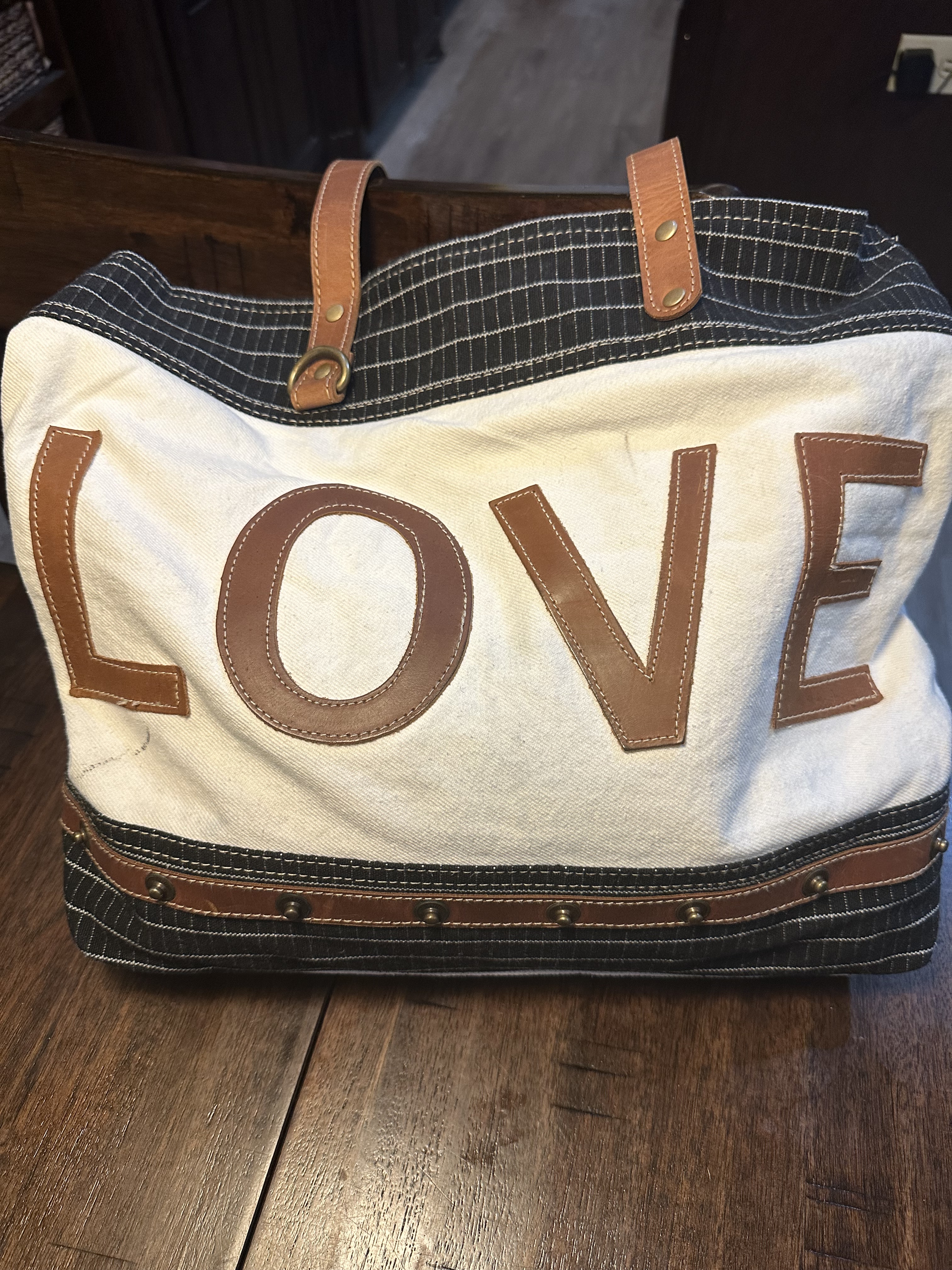
On Sunday afternoon, I stopped by the Frisco Mercantile. This is a large, former box store, that contains individual retailer booths that sell everything from antiques to new clothes to woodworking and art. I love wandering around there when I’m not in a hurry. It is a little like a maze, but I try to weave my way down all the aisles, past all the booths. As I neared the end of my trip, I realized I hadn’t found one of the booths that I specifically wanted to visit because they sell a brand of handbags that I like. I headed to the area where I thought the booth was located. As I rounded the corner, I noticed a tote that said LOVE in bold brown letters. That’s the one I want, I thought. Then, I realized that LOVE was sewn onto a stark white background. I thought about how dirty the white part of the bag would become after I used it. I stood there, second guessing myself, but then I decided I didn’t mind if the bag becomes dingey or stained because love itself can be that way. 

Love may be rooted in romance, family, friendship, or community, but even at its best, it can be messy. Preparing a meal to share with loved ones creates dirty dishes and the real possibility of someone staining their clothes with dropped food (usually me). The first time one of my babies pooped up their entire back or my toddler walked toward me as they prepared to throw up, I knew love came with some unpleasant but necessary elements and obligations. These days it’s the soaking wet, sweaty clothes after basketball practice that I must carefully carry to the washing machine. Love can be amazing, but it won’t ever be perfect or pristine.         

Then again, love is not always easy. We’ve all gone through difficult times in relationships. Times of disagreement, misunderstanding, or poor communication. We may end up with tear-stained pillows from crying ourselves to sleep. We will probably experience hurt feelings. Someone may say something that sticks to us, and we find it hard to shake it off. We may feel unappreciated or undervalued, even by the youngest people in our lives (aka our children).   

At times, we must get down in the muck to make love work. For the record, I’m not talking about physically, mentally, or emotionally abusive relationships. I’m talking about the majority of relationships that have a good foundation but still need tending to keep them steady. To get through problems, we may need to do a little scrubbing so to speak. Admit we were wrong or contributed to the situation. We may have to apologize. We may need to go to therapy individually or with the other person.  

White fabrics may also turn yellow over time. If we take our relationships for granted, they may become discolored, unrecognizable compared to what they used to be. But we can avoid that result by appreciating our loved ones, telling them we love them, and showing them with our actions. We can also help love grow by encouraging our loved ones as they mature and change.

So, I bought the LOVE bag, and I admit I’ve found myself being a little bit more careful with this tote than normal. I don’t throw it in the car floor haphazardly like I usually do. I know that it will still get messy, but I want to respect and cherish love, on the tote and, most importantly, in real life.       

The Spiritual Journey

Standard

Do I have enough journals to serve me for years in advance? Yes. Do I still love to get journals from friends as gifts? Yes. Do I still look at journals when I’m out shopping? Yes. And do I still buy journals for myself? Yes, I do. So, now that I’ve confessed all that, I’ll tell you about my latest journal shopping. I was in Walgreens to pick up meds, and they actually have a pretty good journal section. I came face to face with one that said, “My Spiritual Journey.” My immediate thought was “my spiritual journey won’t fit inside that journal.” While the inside of the journal itself contained a useful guide for daily scripture reading, thoughts, and prayers, I remained stuck on how our spiritual journeys are anything but simple. 

As is often the case, my focus on a word led me to look up the definition. Journey is defined as “something suggesting travel or passage from one place to another” or “an act or instance of traveling from one place to another” (merriam-webster.com). Perhaps it’s the phrase, “from one place to another” that sometimes throws us off kilter when it comes to a spiritual journey. We are so concerned about progress and goals and success in our world that we try to apply those standards to our spiritual lives as well. But measuring progress in spiritual terms is not easy, if not impossible. 

All of the classic travel metaphors apply. At times, we find ourselves in the spiritual wilderness, feeling scared and lost, unable to find our way out of the struggle. Sometimes, in the desert, feeling far from God and abandoned, thirsting for spiritual replenishment but finding none. We may feel like we’re drowning in doubts or that God is not helping us through life’s storms. Occasionally, we may find ourselves on a mountaintop when we feel we’ve had an aha spiritual moment.

Yet, we spend most of our time living in the ordinary, everyday. We can find contentment in the normal rhythms of life. We can make steady progress in our spiritual journey when we pray, worship, and gather in communities. But that can feel stagnant at times too. We may feel as though we’re doing nothing because nothing is “happening.” It’s not like we arrive at a destination so that we can say our journey is complete. We don’t get a promotion or a raise to show our faith has increased. We don’t even get gold stars. 

Many years ago, I struggled with the fact that I did not fully trust God. I just kept thinking if I could only trust God with all my heart and mind, everything would be okay. I thought if I could trust God completely then all would be well, and I would escape worry and anxiety. Then one day, I realized I’m never going to trust God completely without doubt. It just wasn’t going to happen, particularly given my personality. All of a sudden, I knew that my goal was to trust God more and more every day as I matured in my faith, but that I would never feel like I’d completely made it and accomplished my goal. In that moment though, I felt such relief. My spiritual journey was not something to check off a list when complete. It would never end. It would always be ongoing. And there would be good and bad times. 

I’ve filled many journals with prayers and joys and anxieties and anguish. I’ll continue to write my thoughts and feelings down in the journals I have and the ones I will acquire later. Our spiritual journeys are long and winding and can fill volumes, and God is with us the entire way. 

Under the Surface

Standard

When I’m at an airport, I often wonder where people are going to or from and why. Airports provide some good people watching, especially for a writer’s imagination. Sometimes it’s obvious like the energized children with Disney apparel headed to catch a flight with their families to Orlando. I once saw a young couple on a flight and the guy was fiddling with his wedding band constantly. It’s new, I thought. Sure enough, they’d gotten married the night before and were on the first leg of their honeymoon. The business travelers with only a briefcase or backpack these days are usually easy to spot. 

But I’ve also wondered about the sad reasons people fly. Someone is going home after visiting their significant other who just broke up with them. Someone is traveling to see their loved one for the last time or for their funeral. I finally fell into the sad category last week. In the middle of the night after conversations with my brother and mother, it became obvious that my dad was at the end of his earthly journey. So, at 3:00 am, my husband Ben booked a flight for me for later in the morning. 

I wondered how I was going to keep myself together in the airport. When one of my kids called to discuss the situation while I waited in the security line, I started crying and said I had to get off the phone so I could at least get through the necessary steps to reach the flight. I don’t think anyone noticed because we were all facing forward, and I wiped away the tears as quickly as possible. I made it without crying until I secured my rental car and was completely alone on the two-hour drive to the hospital. Two days later, I flew home having said goodbye to my father. I had to prepare for the family road trip back for the funeral over the weekend. 

I’m certain I will write more about my dad’s passing later when I’ve had more time to process. About the outpouring of love from family and friends. But right now, a week later, I just can’t help but come back to a lesson I’ve learned over and over and of which I still need to be reminded. Unless you are intimately involved in someone’s story, you have no idea what another person is going through, so be kind. Give them grace. Allow for the idea that someone may be dealing with problems under the surface that you know absolutely nothing about. 

I was on the verge of tears during my travels and had every reason to be in that state. I hid my fragility behind a very thin mask.  Thankfully, my travels went smoothly because if one thing had gone wrong, I might’ve crumbled. If one person had been unkind, I might’ve broken down. We must remember that we may be the difference between someone falling apart or keeping it together when they feel they must. We may never know when our generosity of spirit could make the way smoother for another. But perhaps we should assume that we are the ones who can ease another’s pain, whether we are aware of their struggle or not.    

A Caring Heart

Standard

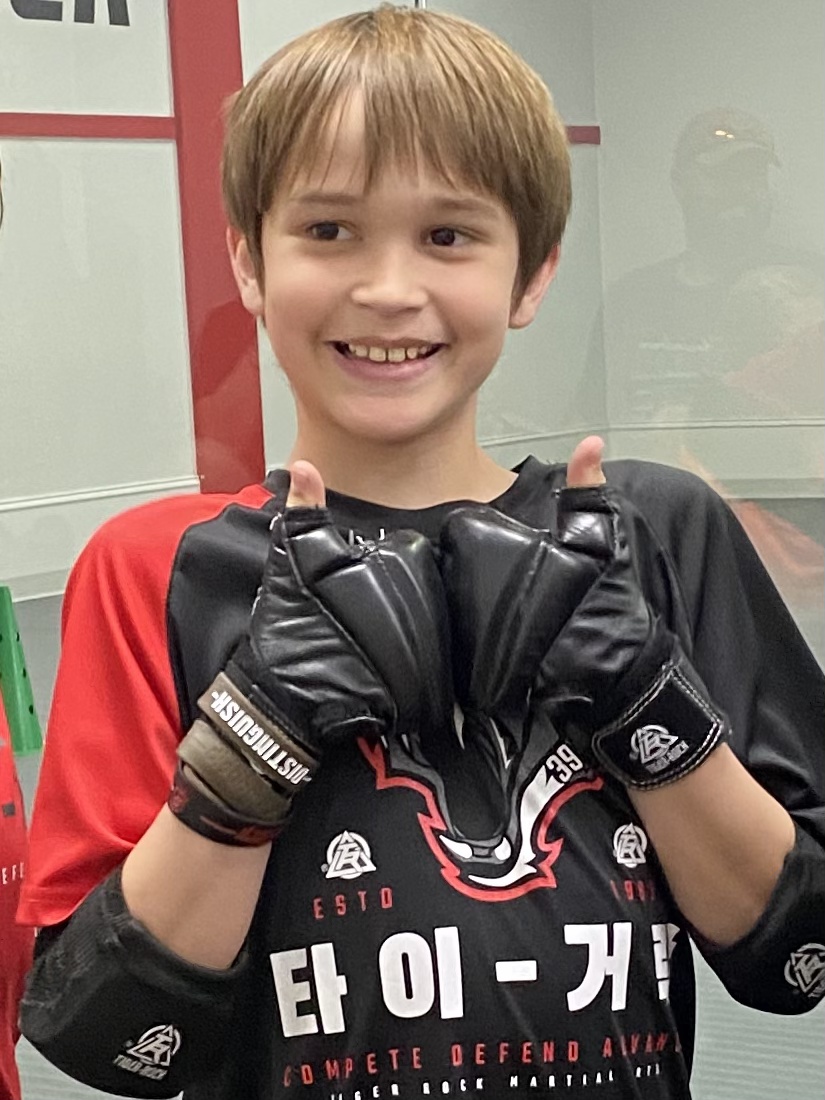
My eleven-year-old son Alex had a huge martial arts test coming up, and he was nervous, as to be expected. He’d prepared for months but this test was different than anything he’d experienced in his martial arts journey up to that point because he’d reached the highest level and rank black belt possible before he turns twelve. This test was the precursor to the test later in the summer after he turns twelve. He had to pass this test or he wouldn’t be able to test later to move up. 

Alex is a sensitive soul and was well aware that the only thing that could stop him was if he got in his head. He comes by his anxiety naturally. A few days before the test in an effort to empathize, I said, “you know I get in my head too.” He shot me a look from the passenger seat said, “I know that!” Obviously. 

On the day of the two hour examination, I sat in my car in the pouring rain waiting until the testing was over because spectators were not allowed to watch.   When it looked like some people had emerged from the studio, I went up and sat on a bench glancing into the window. Alex saw me and shook his head ever so slightly. I thought he was warning me not to enter prematurely. But then his instructor came out to talk to me. I thought “oh no, what happened?” He explained that Alex had gotten upset at one point during the exam when he was holding a target for another student. Even though he said Alex was holding the target just fine, Alex got a bit emotional and acknowledged he was in his head. With his teacher’s encouragement, Alex had recovered and finished though. At that point, I watched helplessly through the window as Alex approached the judge who was delivering the news. 

When Alex turned around, he was elated that he’d passed, but when he got to the car, he let all his emotions out and explained what had happened. He confirmed that the breaking point occurred when he was holding the target for his friend because he felt he was doing it wrong. And he was so scared that he would hurt her chances of passing. He said he apologized over and over because the thought that he might cause her to fail was overwhelming. I told him that I was sorry he’d had a tough time but that I admired him for caring so much about the other person’s success. I told him most people wouldn’t have given the other person a second thought. They would’ve focused only on their own success. 

I can’t help but wonder what our world would be like if we truly believed that our success is tied others’ success. If we truly cared enough to do everything in our power to help others. I am so proud of Alex for passing his test, yes, but more importantly for his effort, resilience, and his caring heart. 

Taking the Heavy Backpack Off

Standard

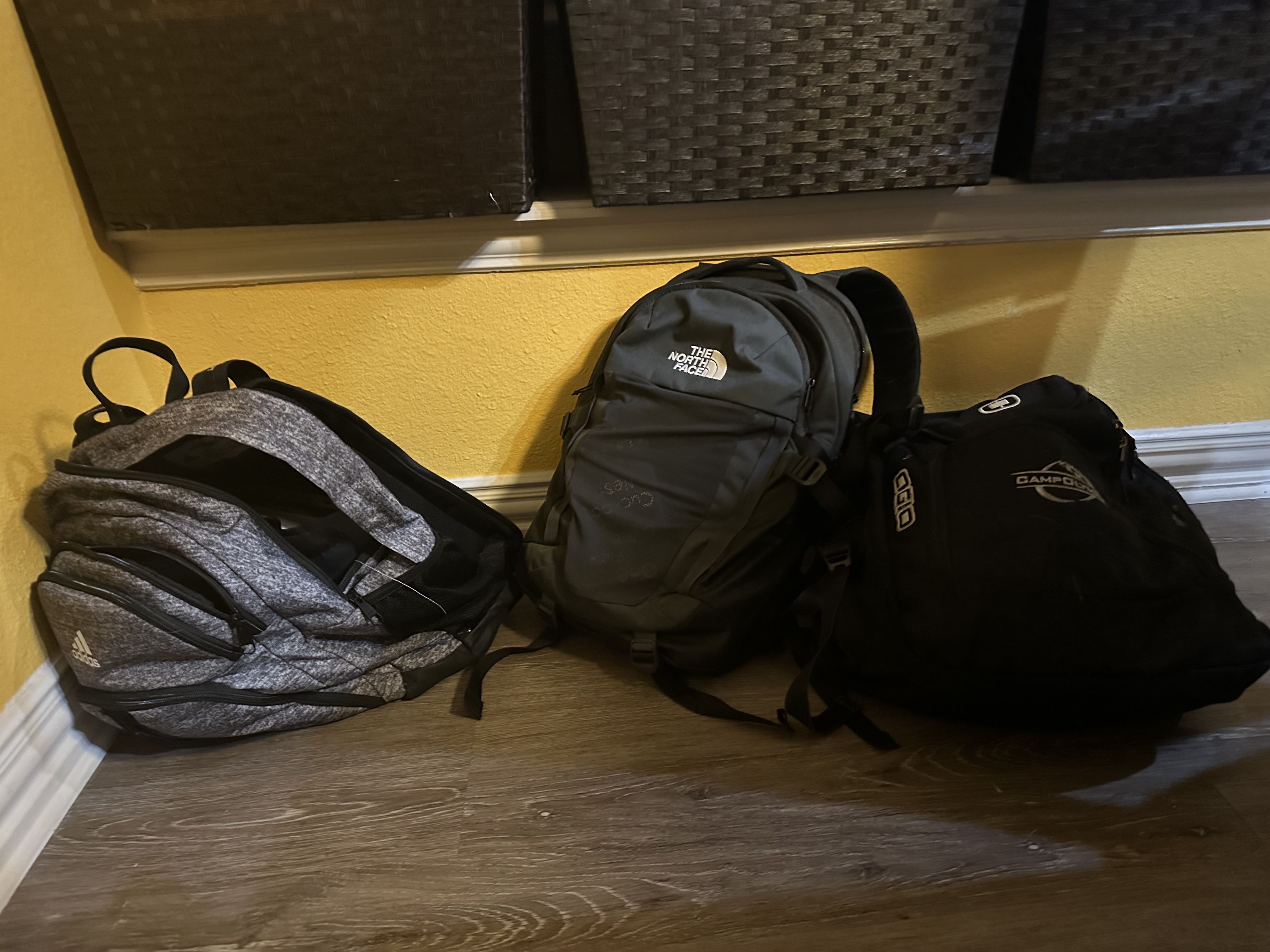
My kids’ school backpacks are heavy. I strain when I pick up the backpacks to move them from one place to another in our house. They carry them every day, all day at school. While they have lockers in their music and athletic classes for their instruments and gym clothes, they no longer use lockers like we did back in the day. They don’t carry heavy textbooks anymore either, but they do carry their computers, binders, notebooks, papers, lunchboxes, and water bottles. They don’t have anywhere else to put the materials they aren’t using in the moment. Everything is in the backpack.

When my twenty-year-old daughter Riley started middle school in 2015, she was so excited to have a locker and shopped to decorate it with shelves and mirrors and pictures. This was such a big deal amongst sixth grade girls that it almost felt like a competition to see who could have the most elaborate or cutest locker. I drew the line at locker safe wallpaper or a locker chandelier. Her locker decorating desire waned as she got older, but when Covid hit, lockers were eliminated to limit close contact and the spread of the virus. The students no longer hung out by the lockers or touched the locker doors constantly. But after they returned to school fully, the lockers did not come back into use. I assume it became one less thing for school administrators to monitor for prohibited paraphernalia, and that was fine with them. And that may be the correct call, but the result is that four years later, the kids carry their school lives on their backs. 

We’ve all heard about the baggage we carry from the past into the present. We often speak of that baggage with respect to our current relationships and how the past colors the now. Or how we sabotage ourselves today with the failures from yesterday. Baggage sounds big though – like we have a roller bag, roomy suitcase, or steamer trunk full of old problems that burden us still. But the backpack symbolizes the everyday to me. The daily worries and tasks that seem never ending. The logistics of schedules that are too crowded and busy. The anxieties about whether all our people are okay. The stress of the regular routine and the dizziness that comes when those routines are disrupted. 

I think we’re all carrying heavy backpacks. And we don’t have lockers in which we can place some of our obligations temporarily. Put some things away and take them out when we are ready to deal with them. There are no shelves in cute, decorated spaces so that we can compartmentalize our issues. I’ve known people who say they can compartmentalize, but I’ve never seen anyone do it well in reality.   

The only time my kids can put their backpacks down at school is when they are sitting in class or sitting at lunch. And they take them off when they get home. I wonder if we can take a cue from them. Even if we must carry the heaviness of life during most of the day, can we put it down for a while when we sit to have a conversation with a friend or when we take a break to rest? Can we make our homes into sanctuaries where everyone can throw off their burdens for a while? If we keep in mind that everyone is carrying their heavy backpacks, perhaps we can invite them to sit with us to lessen the strain even if only for a few minutes. And when they put their backpacks down to sit with us, we get to put ours down too. 

For the Love of Female Friendships

Standard

I was shopping in a boutique with my niece when one of the young women working at the store told another employee that her shift was over, and she was leaving. “Love you,” the other college-aged woman said wishing her co-worker goodbye. “Love you too,” she said as she grabbed her purse and headed out. I’m quite familiar with this behavior because my twenty-year-old daughter Riley and her friends have told one another that they love each other for years. Will they see each other in a few hours? Probably, but they say they love each other anyway. Are they blood-related in any way? No, but they say they love each other anyway. Because they do love each other. They are part of a girl friendship, and they share their love vocally and frequently.

When Riley and her friends started this behavior, I was surprised by this generational shift. We did not do this during my high school or college years. I didn’t tell my roommate that I loved her when I left for class, but I bet if I walked onto any college campus today, I would hear, “love you” from many a room. Not that I don’t have women friends that I love. I have close friends from each of my “eras” to borrow a Taylor Swift phrase.

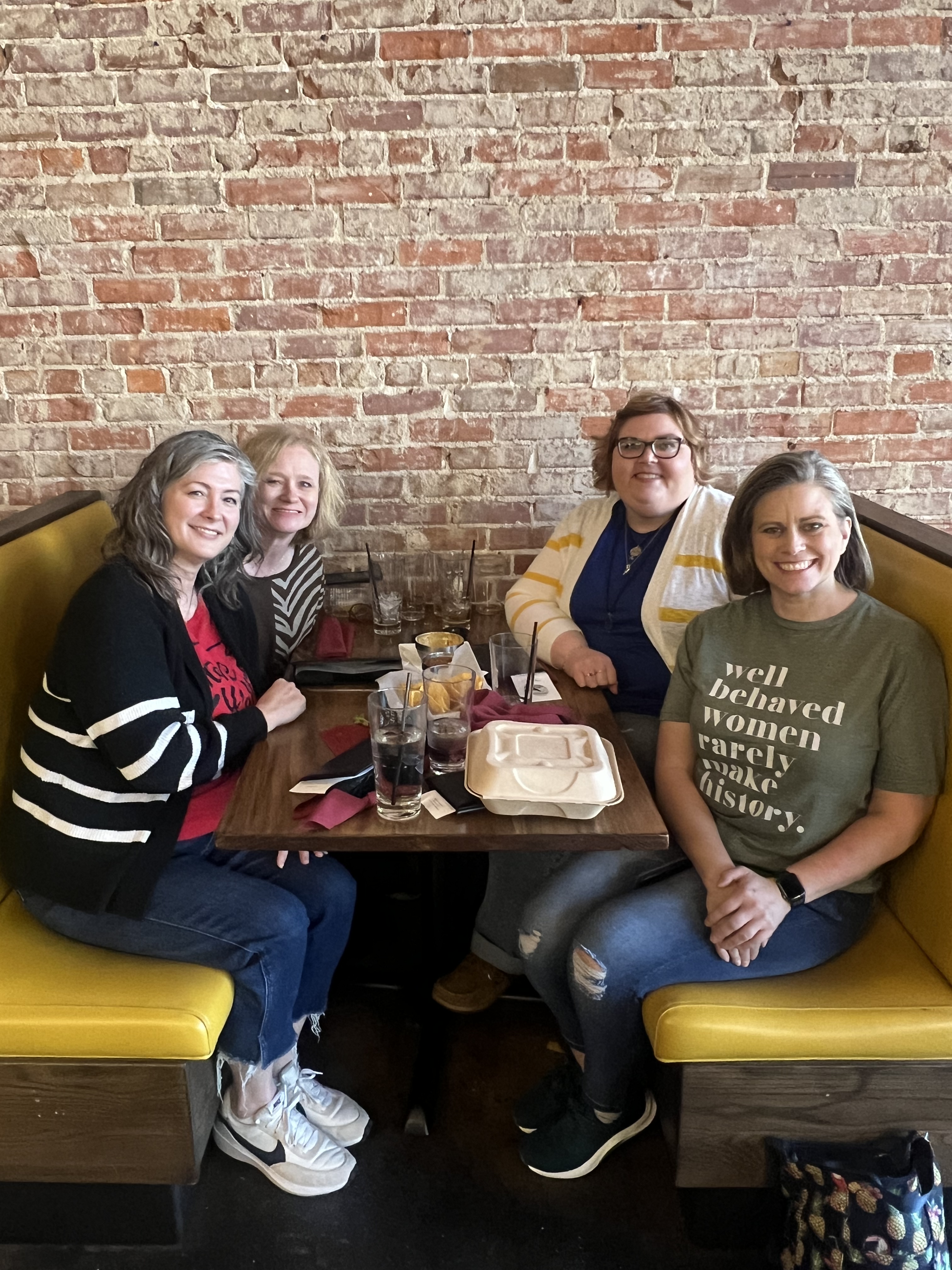
Recently, I had the pleasure of meeting up with three of my friends from my college era in Arkansas. The four of us haven’t been together as a group in ages although I do see some of them more regularly. We keep up on Facebook, so we have some idea of what’s going on in each other’s lives. But the minute we sat down, it was as if no time had passed. Sure, our younger selves would never have anticipated our lengthy discussion about hormones and perimenopause, but we fell right back into a rhythm of sharing and supporting one another. We found ourselves advocating for each other and ready to go to battle if needed. And we laughed and laughed and laughed. I was transported back to a dorm room in 1994 when it would’ve been normal to see us talking and laughing. Thirty years. That’s a long time. Yet it didn’t feel like it had been that long when we sat over lunch for hours until the restaurant started accepting dinner guests. 

When we left, there were a few “love you’s.” But I wish I’d proclaimed it more boldly and loudly. Female friendship is a treasure that cannot be overvalued. I am blessed to have women I cherish from all phases of my life and all geographic locations: college, law school, church. Friends from each stage of motherhood and those connected to each of my children’s lives. And a writing group that has been together for sixteen years. 

If I could speak to my daughter’s and niece’s generation, I would tell them to hang on to those friends because they will be foundational to your lives. When things are going well, they will cheer with you, and when things fall apart, they will hold you up. And from the younger generation, we can learn that expressing our love to our friends is important and beautiful. When we’ve been in the trenches with our friends for a long time, we may assume they know how we feel. But verbalizing those feelings – even if it’s just every now and again and not as frequently as the younger women – can go a long way toward solidifying and maintaining our friendships. 

And to all my girlfriends, I love you!