Category Archives: Spirituality Slice of Life

Lights On

Standard

IMG_2522

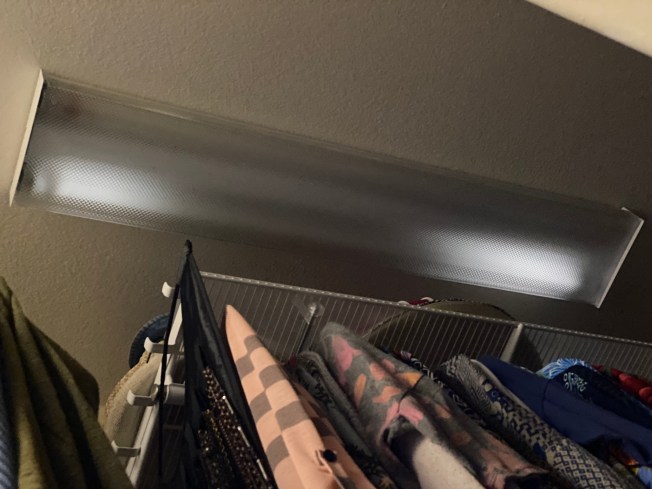
I have two light fixtures in my closet, both with florescent light bulbs. One of those lights has been out for quite a while now.  Florescent bulbs and I don’t have the best history.  I’ve often struggled to fit them correctly in the grooves of the fixture, and I’ve dropped a couple in my day, shattering everywhere.  So, when this particular bulb in my closet dimmed significantly, I did nothing.  I just depended on the one fixture still working even though the closet was much darker and harder to navigate.

The other day, the dormant bulb suddenly came to life.  A buzzing sound accompanied the moment, just like in a movie. The light shone bright, and the darkness disappeared.  And, I saw the mess that was in my closet.  Instead of appreciating the unexpected emergence of the light, however, I was irritated.  “Really,” I said (yes, I was talking to the light).  “You pick today to come back on?  I don’t have the time or energy to deal with this today.”  I didn’t want to see the disaster in my floor.  While I didn’t take the time to clean the closet that day, I realized that once the light came on even for a little bit, I couldn’t pretend that the mess did not exist.

Life works like that sometimes.  The metaphorical light comes on and exposes something in our lives that we weren’t ready to see, but that we can’t un-see once our eyes are opened. In my own personal experience, when a family member cries out after injuring themselves, I tend to want to know what happened and what did they did to cause the problem.  I go directly to figuring out who did something wrong. Over the years, my husband Ben called me on this behavior.  He asked why I didn’t show some compassion first and find out if they were really hurt before assigning blame.  His comment stung.  My desire to be right is strong, and I was defensive.  I didn’t change immediately.  Once my behavior was exposed though, I then felt guilty every time I acted poorly in response to someone else’s physical pain.  Gradually, I started to change.  I’ve worked hard to make sure my first response now is concern and love, not blame or “I told you so.”

We can experience spotlights in our communities, big or small, as well. Recent events have exposed systemic racism in our society.  Ben and I have learned that there are segments of our nation’s history that we’ve never heard about, much less studied.  Some people deny there are problems.  They don’t want to see the issues.  But the light is on, and we cannot ignore or turn away any longer. We must seek to make systemic change to address the systemic injustices.

Jesus spent much of his ministry turning on the lights for people, culture, and society.  When individuals encountered Jesus, they came away changed.  He knew what they’d done, who they were, and he forgave and loved them anyway.  He spent time with the outcasts and made them feel worthy.  Then, he turned toward the upper classes of society and challenged them to care for the poor and weak; to walk away from strict doctrine if it meant excluding people instead of loving them.  Once Jesus exposed the problems, the people could not un-see them.  Some of them hated him for it, even to the point of killing him, but they could not squelch the power of his light.

I think Jesus calls us to be people who will change when we see the light, even when we don’t want to admit our past wrongs.  He also calls on us to shine the light on unfairness and injustice when we witness it.  We can change and also be agents of change.  Let’s look for the light and not cower when we see it.  God is still switching on the lights in our lives and our world.


Tangled

Standard

IMG_2379

My mother-in-law gave me a silver necklace with the word “Faith” written on it in a pretty script.  The word hangs vertically from the chain so that it looks like a cross.  The other day, this necklace became entwined with two other necklaces on my jewelry tree.  I managed to get one necklace separated quickly.  Disconnecting the faith necklace and the other necklace proved to be a more difficult challenge.  I began to work at it, but even using the sharp point of a pencil as a tool, those knots were harder to handle.

Sometimes, faith gets tangled up in real life too.  Most of us have experienced times when we struggle in our relationship with God.  We may find ourselves feeling distant from God for any number of earthly reasons. The struggle to maintain or find our way back to faith once it becomes ensnared is real and complicated.

Questions about faith can be deterrents to faith itself at times.  Some of my questions over the years: why is the world so hard for the poor and the least of us; does God intervene in our lives directly or indirectly; does God have specific plans for our lives or an overarching will for all of humanity?  I still don’t have the answers.  The Bible shows us a lot about the depth and breadth of God’s loving nature, but it can be confusing when it comes to finding solutions.  It contains some very strange stories about people and also a lot of contradictions.  Trying to reconcile every facet of the Bible is impossible.  Historical and political contexts play into the stories in the Bible and motivated the writers to present the material in specific ways.  Instead of telling parables, why didn’t Jesus just give us a list of crystal-clear directions?  Some of us have grappled with this lack of clarity.  But instead of a reason to doubt, I’ve learned to view this uncertainty as reason to study and dig and learn.  Even though the difficult times may bring darkness and frustration, the tough questions can help us grow stronger in our faith ultimately.

Churches and the people in them can cause a lot of faith issues too.  Christians haven’t always presented God in a favorable way, and our doctrines can be exclusionary and static.  We can be unkind, hypocritical, petty, and downright mean.  We don’t forgive as easily as we should, and we have a bad habit of judging others.  We don’t love nearly as much as God expects. We may even become disenchanted with faith because of the people in our lives and their roles in our faith journeys. But we must remember they are only human too.  Perhaps they need to work on their own faith journeys.  Whatever the case may be, we can’t let other people with their flaws and frailties stop us from working on our relationship with God, who puts up with all the incorrect things we say about him and loves us anyway.

When we find ourselves in wilderness times, our hearts hurt and our minds feel troubled.  We may doubt the usefulness of  wrestling with our spirituality, and worry that we will never again feel settled or sure. But relationship troubles with God are temporary, even though time is relative, and a drought can last much longer than we ever thought it would.  We must keep working through the twists and turns of our faith.  We must stick with it until we can feel the knots in our souls start to loosen a little at a time.

I’ve almost untangled the faith necklace from the other necklace, but not completely yet.  And there’s no guarantee that the faith necklace won’t become tangled again with a different necklace at another time.  But faith is worth the time and effort it takes to unwind our relationship with God from the issues that threaten to trap us.  We can’t just throw away our faith when it becomes jumbled – it’s too valuable for us to give up.

IMG_2448


The Children Call

Standard

IMG_2424

We were at the pool the other day when a little voice from the kiddie pool area called out, “Mom.”  I quickly looked to see if the voice belonged to one of my kids even though they are all older and were at the deep end of the pool jumping off the diving boards.  I knew in some part of my brain that it wasn’t my child, but that didn’t matter, I looked anyway.  My mom told me that she always turned when anyone said “mom” in a store.  She explained it was an automatic response, and I have learned that to be true.

If a child’s call for mom accompanies a lost look on the child’s face, mothers will not just glance that way but will step into action.  At the Texas State Fair last fall, after the popular Bird Show finished, we made our way out of the crowded amphitheater.  I spotted a small boy, standing by himself, calling out for his mom.  I glanced at another woman who shook her head.  He wasn’t her child, but in an unspoken agreement, we both started looking for his mother while also loosely corralling him so that he didn’t wander farther off or get hurt in some way.  We didn’t want to scare him, but we refused to let him out of our sights.  His mother came running up fairly quickly, thanking us for staying close by his side.

On May 25, 2020, when forty-six-year old George Floyd was murdered by police officers who kneeled on his neck and body, he called for his mama as he was dying. My heart broke to hear him cry out on the video. When I found out that his mother had died two years earlier, my heart broke even more.  In his last moments, he needed his mother.  Although, it’s probably better she was not on this earth to witness her son struggling as he did against the cruelty that took his life.  No mother should ever see her child suffer like that.

Since Mr. Floyd’s death, I’ve seen the quote, “All mothers were summoned when he called for his mama.”  I believe that.  We mothers turn at the sound of “mom” or the cry of a child.  When a child is hurt or lost, I’ve never seen a mother shrug her shoulders and walk off because it wasn’t her own kid.  We make sure he is found or receives help.  We don’t leave until we know the lost or hurt child is safe. We don’t look away.  We answer the call of mama without even thinking.

In Isaiah, God says to his people, “As a mother comforts her child, so will I comfort you.” Isaiah 66:13.  God knows the special relationship between a mother and child and expects the people to understand the same when he promises comfort.  The love between a mother and her children is deeply rooted and unshakeable in most circumstances.  That love is large and all encompassing.

But we can’t simply take care of our own children at this time.  We must find ways to comfort and care for all of God’s children.  Whether we march in protest, pray for peace, or teach the children in our homes about our country’s history of racism and how systems of racism still exist, we must find ways to acknowledge that the current state of affairs is unjust and unfair. We must stand with mothers of color who fear for the safety of their little boys and girls going to the park, their teenagers starting to drive, their young adults going off to college, or even their adult children leaving for work or going for a jog.

We must summon the courage and concern of mothers throughout history. We must heed the cry.  We cannot look away.  Not this time, not ever again.


Broken

Standard

IMG_2315

When my son Alex was around three-and-a half years old, he followed in his older brother Clay’s footsteps and started building with Legos in earnest. One day, Alex asked me to join him in playing with some “machines” he had created at the breakfast table.  He proceeded to blast my characters because my guys were only allowed to “walk” around according to his game rules.

A little while later, Alex found me in another part of the house and held his creation in his hands.  “It broke,” he announced.  “Well, did you put it back together?” I asked.  “Yeah, but now it’s different,” he said.  He didn’t comment on whether the new one was better or worse, just different.

When Clay, who is three years older than Alex, built with Legos, he would build according to the plans in the instruction books.  He would make them perfect.  Then, not content to complete the structure as described in the pamphlet, he dismantled them on purpose.  Clay continually surprised me with his decision to break things apart to make something new from his imagination.

In keeping with my perfectionist tendencies, I would’ve expected Alex to try to put the pieces back together in the exact same order as he’d had them, to try and replicate the original.  At least, that’s what I would’ve attempted and been frustrated if I failed to make it exactly like before.  If I were Clay, I would’ve put my perfect creation on the shelf to protect it from harm.

Things break, like hearts, dreams, and expectations.  As much as we wish we could, we cannot always prevent brokenness. Sometimes, we know immediately that we are facing a broken situation.  Sometimes, it takes time and effort to see the damage to our lives or our spirits.  Sometimes, we have to make the break ourselves.

When we realize that we are no longer whole, in the way we were before, we may make every effort to reassemble things like they existed before the break. We try to pinpoint who we were before we were broken and retreat to that person.  We want to put the emotional pieces back in the exact same order so that nothing feels strange or uncomfortable or chaotic.

But that’s not how life works.  We may want to avoid the fallout from the broken parts of life.  We can’t.  We cannot go back to the person we were.  We must go through the process, the journey, and the grief in order to rebuild.

At times, the road seems too difficult, impossible even.  And it may take an excruciatingly long time to make our way.  But if we can travel through the difficult times of change with the realization that we are going forward, not backward, we can focus on becoming different. Perhaps, we will discover that the past situation was not as good as we originally thought.  Maybe we will decide that a return to what we previously considered normal is not what we need today.

God does not expect us to remain static.  He does not require us to return to the past in order to be faithful to him, either on a personal or systemic level.  No matter what we are experiencing – the valley of death, the wilderness, the desert – he is with us.  (Psalm 23; Isaiah 43).  If we are broken hearted or crushed in spirit, he is with us.  (Psalm 34:18).

Going through hard times and working to become different is not as easy as putting Legos together after they break, but nothing worth doing or becoming ever is.  Whether we had control over the events that caused the brokenness or not, with God’s help, we can take the broken pieces, and build something new and different. The process may be painful and long, but God stays with us every step of the way and will never abandon us.  God wants us to redeem the past and rise wiser and stronger to embrace the future in front of us.


The Truth Hurts

Standard

IMG_2243 2

When I was in college, I was on the debate team.  We traveled to tournaments on several weekends each semester.  In preparation for one tournament, some of my teammates started dropping out.  I decided that I didn’t want to go if my friends weren’t going, so I went to my debate coach’s office to let him know I wouldn’t be going either.  Let’s just say, Coach Mike was not pleased with my attempt to get out of the tournament.  We went back and forth discussing my reasons for not wanting to go and his insistence that I meet by obligation anyway.  At some point, Coach Mike became aggravated and dropped the bomb on me.  He said, “you know, you’re not always that easy to work with.”

I began to sob, partly because it was harsh, and partly because it was true. In that one moment, something shifted in me.  I thought back to the times when I’d been cocky, ill-tempered, or treated others poorly. I spent a lot of time with my team, and my behavior was not always kind.  And I thought about other times and places and groups of people who had seen me act in less than stellar ways.  Right then, I knew I needed to be better and do better.

It’s been about 25 years since that conversation, but I can still clearly recall how I knew instantly that my life was changed.  The truth hurt – a lot – but it made me try to be a more thoughtful and attuned person going forward.

Maya Angelou said, “Do the best you can until you know better. Then when you know better, do better.”  Sometimes, we feel changed in an instant; sometimes, we have a dawning realization that we’ve changed; sometimes, we see the changes only in hindsight.  Our reactions to the call for change can range from denial and defensiveness to gratitude and repentance.

Jesus spent his ministry calling for change.  He asked those with power and wealth to be more like servants in their leadership.  To serve those with less in order to meet their needs and help them, not just lord over them with arrogance.  He wanted the poor and downtrodden of society to understand that he loved them, plain and simple, no matter what their status was.

God still calls to us.  I have a feeling he might have some harsh, but true, words for us these days.  Jesus might echo Coach Mike’s words and expand on them: you’re not easy to work with, and you’re not behaving like I taught you.

We may claim to belong to him and act on his behalf, but do we spend time getting to know him by praying for guidance and reading his word as a whole (as opposed to cherry picking verses out of context for our own purposes)?  Frequently, the Jesus I know is not the one portrayed in culture. He is painted as punishing, intolerant, and mean, especially to those who are considered the least of us in society. Instead, I think he would call for more kindness, more understanding, more love.  He came to rescue everyone, not just the ones with light skin, money, and privilege.  How are we treating his people, keeping in mind that we are all his people?  Jesus didn’t participate in “us versus them” thinking.  In fact, he hung out with those considered outcasts.

God calls for us to revisit our attitudes and asks whether we are fulfilling our obligations to him.  If we are honest with ourselves, most of us know that we need to be better and do better to follow Jesus’ example.  The truth may hurt, but it can also set us free.  Free to be more like Jesus, so that we show compassion for those in need and give love to all.


Cooking Time

Standard

IMG_2172

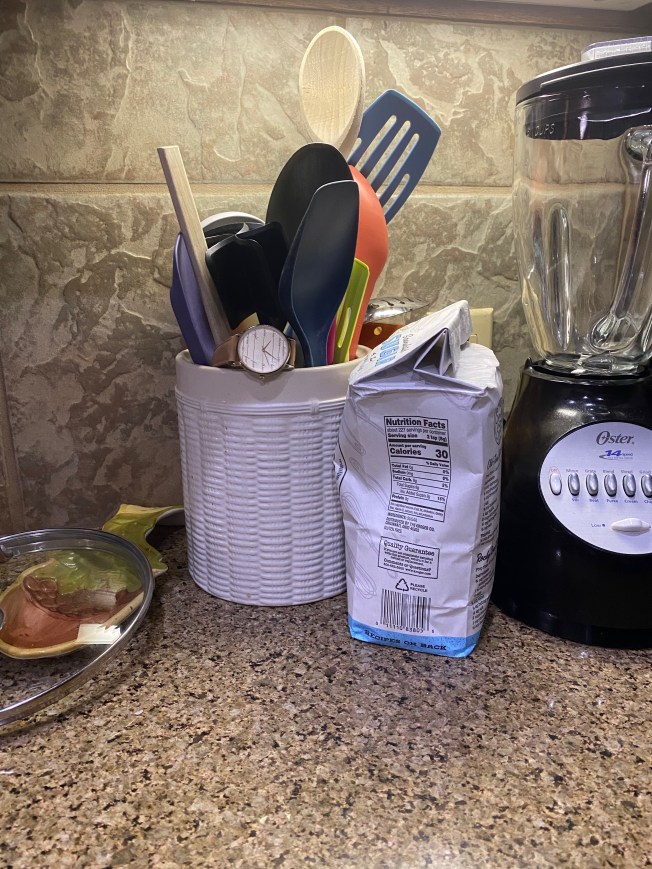
Lately, the show Little House on the Prairie runs on our TV in the background in the early afternoons.  There’s no way I could’ve made it back in the pioneer days for a number of reasons, one of which is the requirement that women had to cook constantly – every single meal from scratch.  After Little House finishes, though, a more modern show – The Gilmore Girls – comes on, and main character Lorelei orders take out, delivery, or eats out all of the time.  I’m much more in the Gilmore Girls vein, though I reassure myself that I’m not quite as bad as Lorelei because at least I can cook.

I can follow recipes and turn out a pretty good dinner.  But I’m not one of those people who can whip up a meal from my imagination and the items I can scrounge up from my pantry and fridge.  I know some people who love to cook.  It soothes them and makes them happy.  My own daughter feels compelled to bake when she’s had a bad day.  Not me – cooking usually increases my stress and anxiety.  I get nervous about getting it right, especially if I’m cooking for folks other than my family.  Maybe that’s why I don’t host dinner parties very often.

When I first became a stay-at-home mom, I cooked quite a bit.  But as the years rolled by, we had more kids for a grand total of four, and as they grew older, our schedules became busier.  To the point that we were not together for most of the nightly meals during the week.  We were always going in so many directions.  I convinced myself that it didn’t make sense to cook on most nights when we weren’t all together.  But now I know, I was lying to myself because lack of time was not actually the problem. During this time of Covid-19 social distancing, I’ve discovered something about myself: I don’t really like to cook.  I’ve had plenty of time to cook over the last few months, but I just don’t want to do it.

Lack of motivation, inspiration, and desire – not time – are the true culprits.   Also, some conflicted thoughts about what it means to be a wife and mom are in play.  Staying home with the kids after working for years was great and also hard.  When I first stopped working, I cooked more complex recipes almost every night.  This was probably guilt induced to some extent.  I felt the need to do something to “earn my keep” because I was no longer working.  Not that Ben ever said anything like that – it was just in my head.  It was not easy for me to work through the mental and emotional gymnastics of guilt, stereotypes, and what-ifs.  The act of cooking is a symbol of all these struggles for me.

And while this crazy time of crisis is not necessarily the best time to over-analyze life, I can’t help but wonder what else I’ve been lying about to myself. Now that I have more unscheduled time than ever in my adult life, I’ve realized time may not truly be the deciding factor in my decision making.  What else have I blamed on lack of time?  When life is busy, active, and moving at warp speed, I can easily say I don’t have time to establish an exercise routine or eat healthy lunches on the go.  When I don’t pray regularly or read my Bible, is that really because of lack of time?  I may not consciously use time as an excuse, but perhaps that’s the problem.  I don’t give my schedule the depth of thought it requires.  I feel as if time is pushing me around, but in actuality I am choosing how to spend my time.

We make decisions all day long.  We dedicate our time to ourselves, our families, work, school, our communities, and churches.  Or we don’t. Sometimes we fall into the trap of believing our behavior is only a result of time or lack thereof.  But if we take time off the table, if time is not the driving factor, then why do we make the decisions we do?  There may be other forces at work in our minds and hearts that drive us.  Are we happy with our time commitments or not?

Granted, all of our time is not our own, nor will it ever be, but taking time to investigate the motives behind or barriers to our actions is a wise investment of time.  Maybe if I admit that time is not always the reason for my actions, I can deal with the real aspects that determine why I do or don’t do certain things.  I can reevaluate and attempt to have my time better reflect who I want to be and what I want to do.

Now that I know my efforts to avoid cooking are not actually a result of a time crunch, but of a dislike of cooking instead, I can make peace with myself. It’s okay if I don’t like to cook. Of course, I’ll still cook sometimes. And my family can witness people who like to cook on the numerous cooking shows we watch together (go figure). Ultimately, the kids will be just fine even if every meal is not homemade.  Instead, they will have a less stressed mom who is more authentic and owns her likes and dislikes without making excuses time in and time out.


The Shouting

Standard

IMG_1596

One of the results of the Covid-19 quarantine is that our family has many more meals together.  In normal times, we try to have as many family meals as possible, but it’s hard because we have so many activities scheduled.  On any given night, we might have dance class, karate, soccer or basketball practices.  Lately though, all six of us have been home constantly, and while each of us grabs breakfast individually upon waking up, we sit at the table for both lunches and dinners.  For the most part, it’s been a good change to have this extra family time at meals, but it’s not always idyllic.  In fact, mealtimes can be boisterous to say the least.

All four of the children have many, many things to say, and frequently, they feel the need to say those things at the exact same time.  And, in order to be heard, they raise their voices. They get loud.  They talk over each other, which makes the conversation grow even louder. Inevitably, Ben or I will tell them to quiet down.  Of course, in order for the children to hear us, we must talk loudly as well, only adding to the noise.

At times, I’ve noticed that someone will feel upset that no one listens to him or her.  The sadness in their eyes gives it away.  As parents, we will stop the conversation and allow the neglected child to talk.  But we aren’t perfect in granting each person equal time to speak.  On occasion, the discussion can turn ugly.  One child will try to silence another by barking, “shut up” or hurling some other insult.  This starts a back and forth exchange, in which Ben or I must intervene.  They compete for attention.  They clamor for recognition.  If they can get another person to listen, they feel affirmed.  If they don’t feel heard, they will talk louder and louder until they are almost shouting.

To me, our table feels like a microcosm of the world these days.  Many of us talk as loudly as possible, screaming over one another, not listening to each other, and then the insults roll off the tongue with ease.  We fight but feel unheard.  We worry about scarcity, so we forcefully demand our share.  We argue and insist on being right because to be wrong means we must admit failure or offer an apology.  And to say we’re sorry exposes us to too much vulnerability.  We desperately crave recognition because we want to feel worthy and loved.  The holes in our hearts and souls push us to shriek for attention and ignore the cries of others seeking the same.

Yet, God does not require us to shout others down or yell the loudest for him to hear us.  We don’t need to compete for God’s attention, although I don’t know how God does it. The scene from the movie Bruce Almighty comes to mind when millions of prayers inundate his email in record time.  I’ve watched people go about their travels in crowded airports and thought about how God could listen to every single one of us at that exact moment.  It’s baffling for our minds, but I believe that God listens to all of us at any given time.  When God taught us to pray, he didn’t say take a number and wait in line.  He didn’t tell us that only those with power or money or social significance could approach him in prayer.  We don’t have to “win” the argument before God will listen. We don’t need to scream.

I wonder what would happen if we believed God when he says he will listen to us.  Could we take a calming breath and rest in the assurance that God loves us and finds us worthy?  We wouldn’t have to beat all the people with our words or our fists to find value in God’s eyes.  One of my favorite passages in the Bible is when God tells Elijah to go out to the mountain and wait for God to approach.  First, there is a strong wind that shatters rock followed by an earthquake and then a fire, but God is not found in any of those powerful elements. Finally, there is a gentle whisper, and Elijah knows God is speaking.  I Kings 19:11-13.  If God can speak in a whisper, then maybe we can lower our voices with one another and approach God knowing he hears us when we speak.

God is the source of our value and worth.  If we can believe that God loves us and gives us his full attention, then maybe we can stop the shouting and better live in peace and harmony.


Heavy

Standard

IMG_1794

My sons love Fla-Vor-Ice popsicles – the ones that come in plastic wrappers in liquid form and must be frozen at home.  In order to keep them stocked in our freezer, I buy numerous small boxes of 16 at the grocery store and order large boxes of 100 from Amazon.  Given the time delay between placing the popsicles in the freezer and them being ready to eat, combined with the speed with which my boys eat them, we try to keep a lot of them both in the freezer and in the pantry.  The other day, seven-year-old Alex informed me that there were no popsicles ready to eat and asked me to put a box in the freezer.  I said, “can’t you do it?” intending for him to get one of the smaller boxes.  However, he only saw the larger box of 100.  He said, “It weighs too much.  You’re a mom.  It’s not heavy for you,” and went on his way.

His statement stopped me cold though because being a mom can be heavy, so very heavy.  The heavy nature of motherhood comes in many forms.  From the start, a mom’s body grows heavier during pregnancy and nursing.  Hopefully, the weight comes off, but there’s no guarantee. Not to mention how heavy those pumpkin seats are to carry once the baby gains a little weight.  Carrying a toddler on a hip or having kids climb on top of us all of the time is physically heavy.  And the exhaustion can be crushing.

But the heaviness does not stop there.  The amount of worry can be oppressive: are we financially secure; is my child safe; do they have good or questionable friends; do they have any friends at all; are they learning in school; are we properly helping with their specific needs; are they too busy; are they too idle; are they healthy; are they making sound decisions?  The list of concerns goes on and on and can be overwhelming.  I worry about whether they’ve been exposed to a variety of activities because I want to help them find their passions.  How do I foster their dreams and celebrate their spirited natures while teaching them the realities of the world that can be unfair and unjust?

Then there’s a personal piece of heaviness for moms.  We compare ourselves to other mothers who seem to have it all together from our point of view.  Personally, I’m serious by nature, so I envy moms who are more carefree and spontaneous. Look how fun they are when I’m not, I think.  And what about the career questions.  I’ve worked full-time, part-time, and stayed home with children.  I’ve felt guilt during each and every stage.  Anxiety, depression, and anger are real and can debilitate us.  Becoming content and authentic is harder than I thought it would be before I became a mom. Fear of failure in the realm of motherhood is intense.  I’ve grieved over two miscarriages, so I also feel for those who wish to be mothers who’ve never had the opportunity or who’ve experienced loss.

The heaviness of heart may be the most difficult to bear and seems to be only a heartbeat away in any given circumstance.  When our children hurt, we hurt.  Sometimes when they cry in pain (physical or emotional), we cry too.  We ache for them and pray for them.  The concerns may change as the child grows, but they do not vanish.  Being a mom is hard.  So is being a person who acts as a mom – the teachers and caregivers come to mind.

But for all the pain and worry, our hearts can also be heavy with positive emotions too.  The love for our children can make our hearts feel as though they will burst.  The sense of pride in our children swells in our chests. The relief that the kids are okay feels like a flood when we realize what could’ve been in certain situations.

The burden of motherhood is sweet and sour; fulfilling and draining; magical and ordinary.  But the feelings are real and honest and common.  We share the same emotions even though we loathe to share those emotions with one another.  Instead of feeling lonely or isolating ourselves, we should rest in the knowledge that all mothers feel a range of emotions – all normal, all understandable, all born out of the love we have for our children.  Motherhood can be heavy.  But we are moms, we can handle it.


Masked

Standard

IMG_1582

When the Covid-19 guidelines changed and the medical experts recommended that people wear masks to stores, I complied because I am a rule follower.  I tied the fabric mask that my friend had graciously made for me around my face and entered the grocery store.  I quickly found that I didn’t like wearing a mask. Not because of the mask itself but because I’m not a medical professional or accustomed to wearing a face covering. First, I couldn’t tie the strings tight enough to keep the mask attached without accidentally tying my hair too. Then, my glasses immediately fogged up so that I couldn’t see, so I removed my glasses while I shopped.  I noticed that I couldn’t tell if other people with masks were smiling or frowning.  Nor could they tell the same about me.  The mask muffled my voice making it harder to exchange the usual pleasantries with the other shoppers or the cashier.  Most irritating, though, was the feeling that I couldn’t breathe.  Obviously, I could breathe, but I felt like I was suffocating. I was sweaty and uncomfortable. I couldn’t wait to get back to my van, so I could remove the mask.  I’ve better adapted to wearing masks in the last few weeks. My gratitude and admiration for those who wear them in their daily work have increased every time I put on one.

My recent mask experience reminded me of the masks we wear on a regular basis. Not the masks that we can see, but the ones that are invisible to the naked eye.  The masks of perfection, stability, fearlessness, apathy, coolness – all the ones we wear to protect ourselves from being seen, being vulnerable, being hurt. We put on our social masks so we can navigate the world or social media or the clique that excludes us.  The masks allow us to hide our real, authentic selves from others, separating and isolating us.

While the unseen masks sometimes protect us from emotional injuries, they also restrict us.  They obscure our sight so that we cannot see others or ourselves with clarity.  We cannot express ourselves with precision because they stifle us from sharing our true feelings.  We prevent people from viewing our actual lives by wearing the masks. They can’t know if we are happy, sad, angry, frustrated or depressed.  The masks we create to guard ourselves end up suffocating us so that we cannot breathe.  And, unfortunately, we cannot remove them easily.  In fact, we become so used to wearing them that we may forget we have them on at all.

We walk through life with our armored masks attempting to keep out the harsh world but may only choke out our own happiness.  We may even approach God wearing our masks because we don’t want him to know who we really are either.

In the Bible, a woman who suffered from a hemorrhage for twelve years reached out and touched Jesus’ clothes while he moved through a large crowd.  She was healed, and then Jesus asked, “who touched me?” His disciples were baffled because so many people were pressing in all around them.  But Jesus insisted on knowing exactly who’d touched him.  The passage says, “When the woman saw that she could not remain hidden, she came trembling; and falling down before him, she declared in the presence of all the people why she had touched him, and how she had been immediately healed.  He said to her, “‘Daughter, your faith has made you well; go in peace.’” Luke 8:45-48 (NRSV).  She had hoped to stay hidden, but I imagine her pulling a veil from her face to reveal herself and confess her action.  Jesus did not want her to hide from him.  He wanted to know her and her story.

God doesn’t need or want for us to put on our invisible masks in our relationship with him.  We can be ourselves in our relationship with God.  We can carry his love and confidence in us wherever we go.  Our efforts to hide from him are futile anyway.  When we feel the urge to put on our shields in the presence of others, we can remember that God knows us fully and completely and loves us anyway.

I think God would want us to follow the safety suggestions and wear masks in public to protect ourselves from Covid-19 these days.  But God wants us to remove our invisible masks with him and with others so that we breathe freely and deeply again.


Follow Through

Standard

IMG_1672

When I was a little girl, I played with Barbie dolls a lot.  I brushed their hair and dressed them in their clothes, including outfits my mom had sewn for them.  I rearranged the furniture in my Barbie Dream House, set the table, and even decorated for Christmas.  All the while, I told their story in my head.  Sometimes they were going on a date or getting married.  I thought through all aspects of where they would go and what they would say. I would place them in their house or their car, and that was it.  Most of the time, I wouldn’t actually act out the story with the dolls.  I didn’t physically move them or zoom them around the room in the car.  Once I’d finished their preparation and created their stories in my brain, my play time was over.  I was done, and I left.  My follow through was lacking.

I realized later in life that my Barbie play was a precursor for my writing career.  An occupational hazard of being a writer is that I do a lot of pre-writing in my head. I can spend hours spinning a yarn in my mind, but it won’t make much of a difference, as in, no one else can read it, if I don’t follow through and commit the story to paper or computer. And that part is harder.  I’ve heard other writers discuss how they can tell beautiful tales in their minds, but struggle to convert the story to the written word.

Not that my lack of follow through is limited to writing.  I’ve had grand plans to create scrap books and photo albums, organize closets, exercise regularly, cook delicious meals at home.  Do more, try harder, be better….  Big plans that I don’t manage to bring to fruition.  But it’s not because of a lack of time or opportunity, it’s the lack of motivation and inspiration.  I abandon projects with reckless abandon.

Throughout my life, I’ve worried about God’s plan for my life.  Living in my head and overanalyzing things as much as I do, I’ve often wondered if God has a specific, detailed map set out for my life. And I spent a lot of time trying to figure out the steps of that potential plan.

As I’ve grown older, I’ve come to believe that God has general plans for all of us that mirror the themes of the Bible: love one another, love yourself, do good, take care of others, don’t be afraid, follow God.  But in addition to the overarching plans God has for us, he also has dreams for us.  He has given us talents and ideas, and like any good parent, he has hopes for how we might use those gifts in our families, churches, and communities.  Praying and inviting God into our lives helps us tap into God’s dreams for us.

But God doesn’t just think about us and then leave us all alone.  God is not just a planner or dreamer who walks away after he comes up with a brilliant idea.  He’s not like me with the myriad stories and ideas in my head that never materialize. God follows through.

While God’s dreams for us may change over time as our realities unfold, he never gives up dreaming and hoping for us.  Even when life is difficult and we wonder where God is, he is in the mix with us. He does not drop us when his dream for us comes crashing to a halt.  He does not abandon us when we make a bad choice.  He promises to stick by us no matter what.

I don’t believe God writes a script for us that we must follow line by line. But I also don’t believe God leaves us to fumble around figuring out our lives without help.  God is good at the follow through.  He is ever present in our lives with his enduring love.