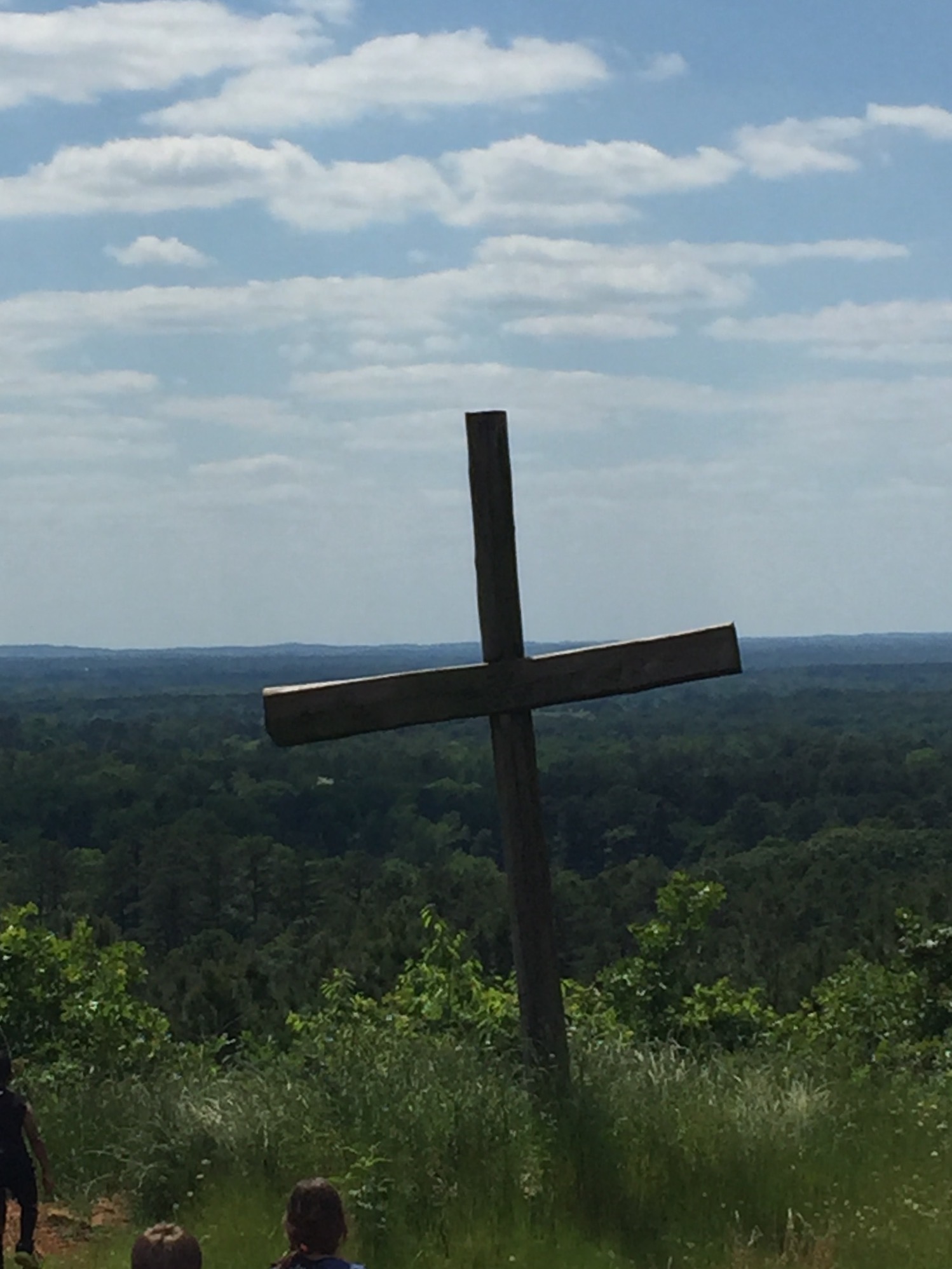
The Pain Before the Cross

Standard

On Good Friday, the day on which Christians commemorate Jesus’ crucifixion and death, I make time to read the story in the Bible.  I feel it’s appropriate to remember the torture and excruciating physical pain that Jesus endured as a sacrifice to save us from our sins.  I want to show respect and adoration for Jesus’ suffering and not simply skip to the happy part of the story – Jesus’ resurrection on Sunday.  But this year, I’ve found myself dwelling on the night before Jesus’ crucifixion when he prayed in the Garden of Gethsemane.  

After the Last Supper in which Jesus and his disciples celebrated Passover, Jesus took three of them to Gethsemane where “he began to be sorrowful and troubled.”  Jesus said, “My soul is overwhelmed with sorrow to the point of death.”  (Matt. 26:36-38).  

Then, Jesus went away from the disciples and “fell with his face to the ground and prayed, ‘My Father, if it is possible, may this cup be taken from me.  Yet not as I will, but as you will.’”  Twice more Jesus went off by himself, away from his sleeping friends, to pray, begging God to rescue him from what he feared would happen.  (Matt. 26: 39-45).  While Jesus was willing to submit to the events that were already in motion, he pleaded with God to stop them and find another way.  

In another version of the story, an angel came to strengthen Jesus, but even so, “being in anguish, he prayed more earnestly, and his sweat was like drops of blood falling to the ground.”  After he finished praying, he was “exhausted from sorrow.”  (Luke 22:43-45). 

Jesus was in the depths of despair, consumed with worry and anxiety.  He was scared.  He was so distraught, he felt like he was going to die.  He hadn’t been arrested or physically assaulted yet, but he felt weighed down by the heaviness of fear and uncertainty.  He suffered emotionally and mentally.  Jesus did not feel a sense of peace or calm.  He was broken hearted and crushed in spirit.  

Most of us have experienced emotional and mental turmoil.  At those times, we may think that no one understands our pain, not even God.  But Jesus knows what it means to grieve to the point that the next breath seems impossible.  He knows how it feels to beg God out of desperation and agony.  He even knows the misery that comes when things don’t work out how we’ve hoped and prayed.  

So, when we experience anguish and darkness, we can trust that God is not a far-away deity who has never felt the way we feel.  We can pray believing that God wants to comfort us because he’s been there.  As we approach the cross and resurrection, let us remember that in addition to physical pain, Jesus knew the torment of heart and mind.  God understands us, cares for us, and loves us.  Today and always.  Amen.    

Bounce Back

Standard

We traveled to New Orleans for spring break this year.  We hadn’t been on a family trip since the world shut down due to Covid after our last spring break.  I found there were some things I’d forgotten about family trips.  We have a tendency to become hangry, so we need to find food for our people before they get upset, which is made harder because one child is a picky eater.  We constantly have to tell one child to stop looking at the phone when we are walking, and we do a lot of walking on vacation.  Inevitably, one child will complain that the trip is completely centered around another child.  Then, that child will accuse the first child of ruining the trip for everyone.  Some other things I forgot about family trips are more positive.  The kids are really great at car rides – they are efficient and quick when we stop at gas stations or restaurants.  We have some really good and in-depth conversations because we don’t have all of the activities and distractions of home.  And I remembered that given the time and opportunity, we can all bounce back from a tough situation.   

We had reservations for the World War II museum on Friday morning and needed to be there at a certain time.  But we experienced a few snafus regarding breakfast.  I thought we could have breakfast at a café that turned out to be closed due to Covid.  Then, we had to backtrack and walk a lot farther to find something to eat.  When we arrived at the new breakfast place, it was not open yet.  Finally, we ate and headed back to the museum, but everyone was still cranky and hot and slightly irritated about rushing to arrive on time.  After a sibling teased eight-year-old Alex, he’d had it.  He was steaming mad and wanted to go back to the hotel.  But then, we arrived at the museum, and his siblings (after a stern talking to from us) started better including Alex as we toured the museum.  Alex got caught up in the story and enjoyed seeing the artifacts from the war.  He rebounded and enjoyed the rest of the day.  He just needed some time and space to make a comeback.  

God gives us the opportunity to make comebacks over and over.  Sometimes we make mistakes and at other times, we know the right thing to do but do the opposite anyway.  We disregard the needs or feelings of others and instead focus solely on ourselves. We are human, and we mess up again and again.  But God is in the business of redemption.  While we must still deal with the earthly consequences that result from our actions, God forgives us and guides us back to him every single time. 

We often feel unworthy and irrelevant, so we have difficulty believing, trusting, and accepting God’s unceasing grace.  But the Bible says, “See what great love the Father has lavished on us, that we should be called children of God!  And that’s what we are!” (1 John 3:1).  God loves us and extends the chance for recovery to us.  God always wants to restore us to him and to ourselves.  Thanks be to God.       

Hoping for Enlightenment

Standard

I slowly perused the local boutique looking for gifts for my daughter Riley’s seventeenth birthday.  My eyes settled on a sterling silver necklace with the word “hope” written in script.  I decided that this necklace would be a wonderful addition to her jewelry collection and a perfect wish from me to her. 

All of us have high hopes for our children even before they’re born.  We hope they’re healthy and happy.  As my kids have grown older, I’ve realized that I can’t control their happiness like I wish I could.  Perhaps that sounds obvious, but looking back, it seems I could contribute to their happiness more directly when they were little.  If they were hungry, I gave them a snack.  If they were tired, I rocked them to sleep.  If they were sad, I could act silly or distract them.  Unfortunately, I can’t guarantee my teenagers’ happiness, a difficult reality for me to  accept. 

I want so desperately to help them that I can fall into the trap of providing unsolicited and unwelcomed “suggestions.”  Riley seeks my advice on a regular basis, and I cherish those moments of connection.  But when I tell her what she “needs” to do or “should” do, she feels as though I am trying to control her.  While my motives are grounded in love, to her, it appears that I don’t trust that she can handle whatever circumstances come her way.  Instead of helping, I end up acting out of fear trying to protect her from pain or rejection.  My efforts to control what happens and how others act squeeze all the hope and possibility out of the situations.  And I teach my children to live in anxiety, instead of hope. 

So, I’ve found myself praying, a lot, in the face of uncertainty.  I express my hopes for my children and confess my desire to control everything.  I invite God into our lives and ask that we feel God’s presence.  But sometimes, I still don’t feel hopeful.  In Ephesians, Paul said, “I pray that the eyes of your heart may be enlightened in order that you may know the hope to which he has called you…”  (Ephesians 1:18).  I’ve loved this verse for a long time for the beautiful imagery of God opening our hearts, minds, and spirits so that we will see and understand God’s mandate to hope.  

Instead of constantly telling my children what they “need” to do, I need to pray that my own heart will be enlightened.  Maybe then I will stop living in dread and release my stranglehold on hope.  I can better teach my children to have hope for their lives as they grow and mature.  And by truly embracing God’s call to live in hope, I can, hopefully, find greater peace with them and with myself.    

Perspective Big and Small

Standard

My seventeen-year-old daughter Riley was in her feelings one afternoon when she dramatically exclaimed that she and one of her friends were “having some challenges.”  My eight-year-old son Alex looked at me with concern because he knew how important this friend was to Riley.  “What happened?” he asked.  “They can’t see each other tonight after all,” I explained.  Alex seemed confused, and then he marched up the stairs after Riley.  When he came back, he said, “I told her that I’ve studied challenges in Black History Month, and this is not a challenge.”  I laughed because he’d put Riley in her place, and Riley actually agreed. 

We all need perspective sometimes.  This past year, the pandemic created so many hardships and difficulties.  And often, during the quarantines, isolation, canceled plans, and abandoned hopes, the anxiety, fear, and frustration in our family bubbled over.  Then, we would catch ourselves and remember that it could be so much worse.  So many people were suffering, and our issues paled in comparison.  We could buck up our spirits, at least temporarily, with reminders rooted in perspective.     

And yet, our pain was still real to us, and we could not ignore it.  The kids were learning online last spring, missing friends and their activities.  We tried to keep our family safe, minimize the disruptions, and keep moving forward.  Summer was better, but concerns mounted with Covid surges and going back to school in the fall.  My mental and emotional health suffered, and I had to seek more help than usual to stay balanced.  While much of the perspective we gained dealt with the larger picture and appreciating our place in it, some of the perspective we found was about the importance of the small, significant ways we interact with one another and our own individual wellbeing.     

Both the big and little things matter in life.  And God is in the midst of it all.  The Psalmist said, “Where can I go from your Spirit? Where can I flee from your presence?  If I go up to the heavens, you are there; if I make my bed in the depths, you are there.” Psalm 139:7-8.  God is with us when we have a broader, more expansive view of our lives and the greater world, and God is with us when we are deep in the muck and cannot see an easy way to climb out.  God can show us that we are not as bad off as we think.  Alternatively, God can help us acknowledge that we are not doing well and need to change course.  

I hope the challenges of the past year will diminish and ultimately vanish as we go through this spring.  Even though we hope not to experience another year like this one, we will always face some sort of challenges in life.  Some bigger than others.  But we must remember that we can always depend on God no matter what, and in the end, that is what really matters.      

Stay Focused

Standard

In January, I was in the throes of writing a nonfiction Christian book proposal to submit to a writing program.  In the midst of the process, I ran out of pages in my prayer journal and decided I needed to buy a new one.  Not that I don’t have several journals just waiting in reserve for my use.  This time, though, I felt I needed a new one that somehow spoke to me, to keep me going, to help me stay on task.  Some people may not think a journal can do all of that, but a beautiful or even quirky journal can be a bit magical in my opinion.  So, when I visited my favorite boutique, I searched high and low for a meaningful journal.  I finally found the perfect one with “stay focused darling” written on the front in script.  The Dayna Lee Collection journal continued its inspiring message on the inside cover, “I look forward to holding any thoughts, dreams, goals, brilliant ideas, and amazing moments because you got this!”  I felt like I found the journal that would encourage me to keep pursuing my goal regarding the book proposal.  

I submitted my proposal, but in February, I found out my submission didn’t make it past the first round and also that my book idea that formed the basis of the proposal was lacking in many ways in the eyes of one of the editors.  I was disappointed and sad.  I’d thought I was doing what I was supposed to do, what God wanted me to do, and now I felt unmoored.  Was I supposed to keep working on the same book idea?  Was I supposed to go in a different direction?  Had I deluded myself throughout the entire process?  I was confused and frustrated.  

I found myself staring at the cover of my journal wondering if I’d picked incorrectly with respect to both the journal and the book idea.  “Stay focused darling” almost seemed like a taunt now.  Stay focused on what exactly?  I also asked God these questions as I wrote in the journal.  Slowly, it dawned on me that maybe the focus I needed to maintain was not on a particular writing project but rather on God.  I often read a framed scripture that we inherited from my husband Ben’s grandmother, which says, “Thou wilt keep him in perfect peace, whose mind is stayed on thee.”  Isaiah 26:3 (KJV).  Another translation of the verse says, “People with their minds set on you, you keep completely whole, steady on their feet because they keep at it and don’t quit.”  Isaiah 26:3 (MSG).  

Honestly, I’ve not worked through all of my difficult emotions surrounding my writing yet and don’t know which way I will go with my project.  Perhaps the most important thing for me to remember though is to keep my mind on God.  If I continue to look to God for comfort and guidance, God will help me remain stable and balanced when confusion threatens to cloud my mind.  The same holds true for all of us.  God wants each of us to keep our thoughts on God.  I imagine God saying, “It’s going to be okay.  Keep your eyes on me and stay focused darling.”

Simplicity of Eligibility

Standard

I walked through the family room, on my way from one task to the other, when the words of a guest on a television news program caught my ear and made me stop.  In his discussion of the Covid vaccine distribution, Dr. Ashish Jha, Dean of Brown University’s School of Public Health, said that our country needed “simplicity of eligibility.”  His comment made sense to me given the confusion from state to state about who is eligible to get the vaccine currently.  In some states, teachers are eligible to receive the vaccine no matter their ages or underlying conditions while not in other states.  I agree with the expert regarding the need for simplifying vaccine eligibility and access, but for me, there was a broader truth to his statement. 

Eligibility means “having the necessary qualities or satisfying the necessary conditions.”  (dictionary.cambridge.org).  If we have the right qualities, we can get something, we can be part of the group, we can belong.  But oftentimes in our society, real or perceived barriers to entry that have nothing to do with actual qualifications prohibit our belonging.  Recently, my teenage daughter entered a situation in which she didn’t know anyone.  She said she had a tough time finding a group with which to engage because they had their cliques already.  It’s a familiar and painful plight.  We shut people out, we shut them down, and we make them feel excluded by our words, our behavior, and our attitudes.  Perhaps we act from our own set of fears and insecurities, so we cling to the known and erect walls to keep out the unknown.  But the resulting shame and exclusion hurt others just the same.   We feel good because we belong and don’t give enough consideration to those people on the outside.  

Our faith communities are especially capable of making people feel left out.  When my mother was a little girl, she and her sister tried to go to a church one Sunday, but they were turned away because they had on pants instead of church dresses.  They were poor and did not attend church, so they didn’t have Sunday dresses and didn’t know they needed them.  This may sound ridiculous today, but we still see plenty of ways to block the entrances for people.  In fact, many folks will never even attempt to enter because they already feel they are not eligible: they don’t know anything about church or religion; they’ve been rejected by religious institutions or people before; they’ve heard they are sinners and think they are not eligible as a result; they hear harsh rhetoric from religious people and it scares them.  The list of ways those on the inside of the church walls make others feel unwelcome goes on and on.  

We make eligibility complicated and seemingly impossible when truly eligibility is simple: be a human.  Jesus said, “Come to me, all you who are weary and burdened, and I will give you rest.” (Matt 11:28). Sounds to me like an invitation to everyone.  Not every church will fit every person.  But each of us gets to decide where we want to belong, where we want to pursue God’s teachings and love, where we want to be in community with other people who believe similarly.  That’s a personal decision – not a decision that a church should make about a person before they even darken the church’s doorstep.

Let us be mindful of the ways we purposely or inadvertently communicate to others that they are not eligible to be in our communities, in particular in faith settings.  Let us follow Jesus and make sure that others feel a “simplicity of eligibility.”

Hold the Light

Standard

On the first day of the rolling blackouts during the crazy and historic winter weather of February 2021 here in Texas, we did not experience much regularity – we simply didn’t know when we would be with or without power or for how long.  The next two days brought a schedule to the blackouts of forty-five minutes on and forty-five minutes off.  We learned to mark the time, so that we could cook, microwave, shower, reboot the internet, and charge devices as soon as the power came back on.  But on that first day, the power went out twice unexpectedly while we were in the process of cooking.  

At one point after dark when the electricity shut off, my eleven-year-old son Clay held my cell phone with the flashlight on as I finished making dinner at the stovetop.  It happened kind of naturally and I was focused on the task at hand, so it didn’t dawn on me that my child was providing such a vital service to me until I finished cooking.  Then, I looked at Clay and said, “thanks for holding the light for me.”

Sometimes, we feel like we are in the dark in life.  We may even feel disconnected from the power source –  we may believe that God is distant from us.  Our time of darkness may happen suddenly, like the electricity going off, or may come upon us gradually, like the sun setting, but either way, we may be lost because we do not see a clear way out of the dark.  

But when someone holds the light for us, they shine God’s love on us.  They remind us that we are not alone, and that God has not left us.  We can begin to feel a bit of warmth and see a path back to the broader light.  We can start to feel hope.  And when we finally come out of the dark, we can then be the light for another.  

In a letter to the church at Corinth, the apostle Paul wrote, “Praise be to the God and Father of our Lord Jesus Christ, the Father of compassion and the God of all comfort, who comforts us in all our troubles, so that we can comfort those in any trouble with the comfort we ourselves receive from God.”  (2 Corinthians 1:3-4).  When we find ourselves in darkness, let’s look for others who can support and encourage us, who will be the light at the end of the tunnel, pointing to God’s love and mercy.  Then, let us hold the light for others while they are in darkness to demonstrate God’s compassion and comfort.  We can allow the light of God to shine through us and help illuminate the darkest night.          

Small Moments of Encouragement

Standard

The plumber Dewayne recommended that we replace the kitchen faucet and some hardware underneath the sink in order to prevent any further leaks after the dishwasher soaked the carpet and hardwoods.  So, while he worked, I ran to the store to purchase a new faucet.  Dewayne told me that the new faucet might have a liquid soap dispenser, which was true of the one I selected.  After he installed the new faucet, he told me that another customer of his had a similar soap dispenser and that the woman had spent eight years getting on her hands and knees, reaching underneath the sink, unscrewing the soap container, refilling the soap, and then reinstalling it.  He pulled the pump out of the top of the sink and informed me that all I had to do was pour the soap into the container from the top and replace the pump.  “Thank you for telling me,” I said.  I felt grateful because I would’ve been like the woman who filled the soap the hard way.  And then I know myself well enough to know that I would’ve gotten tired of doing it that way and simply stopped using the dispenser all together.  

I tend to avoid doing things that take too much time or are complicated or burdensome.  But I also avoid things that I don’t know how to do in the first place.  Instead of taking the plunge and diving into an unknown process, I’ll find a hundred other things to do.  The anxiety I feel when I don’t know how to do something can be debilitating.  The fear can grow to the point of paralysis.  But a tip from someone who has been there or done what I’m worried about can make all the difference in how I proceed.  

When I was pregnant with my first child, two of my friends separately told me that if I could stick with nursing for the first ten to fourteen days, which would be difficult, then nursing would become a wonderful experience.  I held onto their words during those first two weeks when nursing was painful and hard and sleep was elusive.  I think I might’ve quit if my friends hadn’t given me their invaluable advice.  Instead, I stuck with it, and their words proved correct.  

Sometimes, all it takes is for someone to share a small piece of their experience to help us overcome our hesitance and move forward.  The same applies in our faith journeys.  In his letter to the church at Rome, apostle Paul wrote, “I long to see you so that I may impart to you some spiritual gift to make you strong – that is, that you and I may be mutually encouraged by each other’s faith.”  (Romans 1:11-12).  

Being vulnerable with one another, expressing our doubts, admitting to failures, building one another up with words and actions can change the situation for others who may feel they are the only ones who’ve had a particular experience or made an egregious mistake.  Just a small gesture, a moment of caring, a little guidance can go a long way toward encouraging another.  It’s not a matter of telling people what to do or controlling them but showing them kindness when they need a hand or a bit of support.  We can find comfort from the reassurance that none of us are perfect, and that we need not be perfect to enter into relationships with other people and with God.  

Let us mutually encourage one another with positive words of advice and small moments of connection.  We may never know how our sharing may help someone.  But it may make all the difference.  

Family Folklore

Standard

Our family recently had quite a week.  Our dishwasher leaked, but not in an obvious way.  We didn’t discover the problem until the carpet behind the kitchen wall became soaked and the hard woods in front of the dishwasher began to seep water when we stepped on them.  On Wednesday, the plumber arrived, cut off the water to the dishwasher, said we would need a new dishwasher, and because the damage could lead to mold problems, called the restoration company for us.  By the end of the day, five industrial blowers that would dry out the damaged floors were running – loudly – for twenty-four hours a day for the next four-and-a-half days. 

The day after our dishwasher leak, we found out Alex had been exposed to Covid.  I picked him up from school, and he and I got tested.  He was positive, even though he had no symptoms.  I had to get the rest of the kids from school, Ben came home from work, and we began our quarantine with the noise of the blowers, just in time for Jed’s fifteenth birthday.  We isolated Alex in the TV room upstairs, and while watching television and playing video games is fun for a few days, it can become a grind even for an eight-year-old boy.  He went outside for a little while one day, and when he went back upstairs, he texted me, “I’m back in the cage.” 

A couple of days into quarantine, Jed broke a window with his basketball.  Thankfully, it was double paned, so the ball did not break the window entirely and no one was hurt.  But when Jed said, “the hits just keep coming,” I shushed him immediately not wanting to jinx us with anything further.  

Thankfully, none of us experienced Covid symptoms, and we knew it could all be much worse, but some of us (me) don’t do so well mentally and emotionally when change knocks us out of our routine.  Because of all the chaos, we will talk about this week as a family for a long time.  I kept thinking, this will become part of our family folklore.  The term folklore probably only came to my mind because Taylor Swift titled her popular 2020 album “Folklore.”  So, I felt compelled to look up the actual meaning of folklore, which is defined as, “the traditional beliefs, customs, and stories of a community, passed through the generations by word of mouth.”  (lexico.com). 

We will definitely pass down the tale of this crazy week to the next generation.  We will talk about how we reacted with tears, frustration, and laughter.  We will feel pride in how we endured this week and the entire pandemic with resilience and grit.  I wonder what details or conversations we will exaggerate as we retell this story years from now.  I also think about the unknowns.  For example, I don’t yet know the grandchildren who will hear these stories.  But for now, we connect over the funny and the not so funny.  We gain perspective by looking back and feel hope as we look to the future.  The fabric of the family is built, at least partly, on the experiences we share and reliving those stories again and again.  

The Bible is full of stories that people passed down from one generation to the next.  And Jesus told stories to those who gathered to listen to him.  In the Bible, Luke investigated the stories from the beginning, including those handed down from those who knew Jesus, in order to give his account of Jesus’ life.  (Luke1:1-4).  Before recounting one of Jesus’ stories, Luke wrote, “Then Jesus told his disciples a parable to show them that they should always pray and not give up.”  (Luke 18:1).  Jesus was building the fabric of his family of followers, encouraging them to stick together and stay true to him even when their lives became difficult.  When Jesus’ time on earth was complete, his people told others what they’d heard him say, how they saw him act, and how he made them feel. 

We can model our efforts to create folklore on the way Jesus gathered people together and told them stories.  He knit together a community who would carry on his love and legacy.  We can build strong ties among our families and communities by sharing stories that demonstrate how much we love one another.  With God’s help, we will form our family’s folklore and establish bonds that last a lifetime and beyond.               

When to Push Send

Standard

My finger hovered over the “send” button.  I’d written the email, I’d attached my book proposal, but I hesitated. I’d worked so long and hard on the document and had such high hopes that my proposal would be well received.  I’d prayed throughout the process of writing the proposal that God would help me find the words in order to share God’s love with others.  The anxiety and nerves caught up with me in that second, and I felt somewhat overwhelmed.  I took a breath, said an additional prayer, and hit the button.  Later, I told my daughter Riley that I’d shed a few tears before I found the gumption to send the email.  She said, “sometimes, there can be a lot of emotion in hitting send.”  I thought her statement was spot on.  That moment before we make a decision to act can be daunting and quite simply terrifying.  

So many factors go into making decisions.  We weigh the pros and cons.  We think through the potential outcomes.  We worry about what we might lose if we act.  We wish for what we might gain.  But our inability to control what happens is difficult for some of us.  Sometimes, the risks we perceive can paralyze us and keep us from making a decision at all.  When we don’t have all of the information our analysis feels incomplete.  But in so many circumstances, we simply can’t have all of the data before we choose.  In particular, we cannot know for certain how others will act or react to our decisions.  The unknown looms large and that can be maddening for those of us who want to know all the facts, all the time. 

For my book proposal, I had a deadline that provided the impetus I needed to finally push the send button.  So often though, we don’t have a timeline, so we wait, not wanting to pull the trigger in case we make the wrong choice.  Sometimes these are big life decisions, like what job to take or where to go to school.  But often our choices seem small but still so very important, like determining the right time to say what’s on our hearts or minds. 

At the root of this decision-making dilemma is fear.  Fear of choosing wrong and feeling like a failure or fear of suffering emotional pain and possible rejection.  In the Old Testament, when David was captured by his enemy, he said, “When I am afraid, I put my trust in you.  In God, whose word I praise — in God I trust and am not afraid.”  Psalm 56:3-4.  I marvel that in his dire situation, David could write about trusting God when he was afraid.  I admit that my trust in God is weak and my fears about making decisions pale in comparison to David’s plight.  But I also wonder if David wrote about his fear and his choice to trust God during those uncertain times to remind himself.  Maybe he repeated those words over and over like a mantra: When I am afraid, I put my trust in you, God.  

In those times when we encounter a decision, we can scrutinize our options and then pray in earnest for God’s guidance, inviting God to help us in our dilemma.  Ultimately, we face that moment right before finally making the actual decision.  As we hit the send button, literally or figuratively, when the anxiety and fear are at their peak, we can repeat David’s words in order to find courage to take that step.  When we are afraid, let us put our trust in God and rest in the hope and comfort that God will be with us always.