To Make an Accurate Picture

Standard

We go through a lot of printer ink in our household.  The other day, I printed a document that was supposed to contain a couple of beige colored blocks but because the pink cartridge ran out of ink, the area came out a puke green color. Without the pink to blend with the blue and yellow cartridges, the effect was unintended and unattractive.  

I replaced the cartridge with a new, full pink cartridge.  But then, the printer did not automatically kick start itself again.  The machine began “printer maintenance” and said it should not be interrupted.  I felt annoyed with how long it took and began to push buttons, unplug, and reboot it.  And yet, it continued its maintenance.  After I complained about the length of time it took, my husband Ben said, “well, we all need maintenance.” How true.  

We’ve all heard the analogies akin to the empty ink well.  We need to refill our tanks with love in order to be healthy, emotionally and mentally.  We need regular self-care.  We know all of that intellectually, but it’s harder to put into practice.  We often feel selfish if we take too much time to care for ourselves.  Any type of relaxation or restoration, even just a nap, feels self-indulgent.  

One way we can fill ourselves is to focus on our relationship with God.  Sometimes we may think of our relationship with God as a series of obligations or duties.  God tells us to pray and participate in worship, so we may think it’s merely a requirement that we must satisfy.  But what if we thought of the time we spend on our relationship with God as a type of self-care?  God fills our minds, hearts, and souls when we concentrate on building our connection with God.       

When the pink cartridge was empty, I needed to refill the pink cartridge, but the printer needed to perform maintenance for the pink, yellow, and blue to blend together in order to produce an accurate picture.  Without one of the ink colors, the result was skewed.  Without maintenance, they couldn’t work together.   

If we do not fill and restore ourselves, we cannot continue to work well, physically, mentally, or emotionally.  But we forget that if we don’t fill ourselves up, those that we love will actually suffer too.  Without proper maintenance, the relationships and communities in which we engage will not be at their best.  So much of our well-being is connected to having healthy relationships.  We cannot help our families, our colleagues, our communities live into their promise if we refuse to care for ourselves.  Filling ourselves with God’s love and grace helps us properly maintain those relationships.  God shows us how to demonstrate his kindness, welcome, and inclusivity.  God helps us merge our individual selves into beautiful, colorful composites that work together and reflect God’s glory.  

We all need a reboot and maintenance every now and again.  Both on the individual level and the larger community level.  We must be filled individually and then fuse together to make a complete picture.  All with God’s help.       

Enough Mercy to Go Around?

Standard

I use the notes app on my phone to write down everything from grocery lists to the titles of the books I’ve read or want to read.  But the most important words I record are the ones that come out of my kids’ mouths.  For instance, just the other day, eight-year-old Alex told me about how a particular pair of shoes felt on his “foot fingers.”  He quickly corrected himself, “I meant toes.  I just couldn’t think of the word.”  I quickly jotted down his hilarious comment.  

Recently, I perused through the old notes and noticed one from four years ago.  Jed, age ten at the time, was reading a book to Alex, age three, and instead of reading the correct words on the page, “merry-go-round,” Jed said, “mercy-go-round.”  When I reread that note, it resonated with how I feel today in 2020.  Currently, our lives often resemble a merry-go-around, and we may lack enough mercy to go around.  

Merry-go-rounds may conjure happy images of decorative horses moving up and down as children hold on to the reins and laugh.  But there are also those old school, metal merry-go-rounds that still exist on some random playgrounds.  The kind that requires one kid to push or pull the device until it ends up spinning so fast another kid’s body launches off the equipment into the air and then slams into the ground.  That is, unless someone throws up from motion sickness. One year on our church’s women’s retreat, we found one of those merry-go-rounds and decided to give it a whirl.  We discovered that while we still enjoyed the ride, it scared us a lot more than we remembered.  

This year has often made us feel like we are hanging on for dear life to an old, rickety, metal merry-go-round while it spins at light speed.  With all of the social isolating, quarantining, zooming, staying home, canceled plans, social unrest, election madness, and the rest, it’s been one crazy, wild ride.  We’ve experienced extreme levels of anxiety, depression, uncertainty, fear, and toxicity.  And we’ve felt less kindness, understanding, and unity than we would’ve hoped for in the face of global crises.  

To give mercy is to show compassion or forbearance, especially to an offender or one subject to one’s power. (Merriam-Webster.com).  Often, we don’t realize that anyone is subject to our power because that sounds formal, as though we hold an official position over someone else.  But we have more power than we think.  We have the ability to hurt people with our words and actions, which can do more damage than we might think possible. 

Or we can show mercy.  We have the power to be gracious and generous.  We can choose to love even when we don’t really feel like it.  We can hold back instead of saying exactly what we think when our words would be cruel or hurt another’s feelings.  We can act in a way that is inclusive and welcoming. 

Jesus said, “Be merciful, just as your Father is merciful.”  Luke 6:36.  We experience God’s mercy every day.  God loves us and shows grace to us when we make mistakes.  All of us carry more burdens today than usual.  We have endured more pain and angst than normal.  This time in history calls for us to demonstrate great amounts of mercy to one another.  We must choose to care and love each other.  Now more than ever, Jesus’ words echo with importance.  Be merciful.  Lord, help us to be merciful.  

How Can We Run the Race Undeterred?

Standard

My husband Ben and I both have political science and law degrees, so to say we pay a lot of attention to politics and campaigns is an understatement.  Especially in a presidential election season, we consume a great deal of political coverage.  Recently, I saw an interview with Jon Ossoff, who is running for the Senate from Georgia.  The interviewer asked him about the long lines that Georgians faced in early voting.  Ossoff said, “the people are undeterred by the obstacles put in their path to vote.”  His comment struck a chord with me but not necessarily because of the political implications.

A person is undeterred if they are “persevering with something despite setbacks” (lexico.com).  I began to think about situations when I’ve been undeterred.  When have I thought nothing is going to stop me?  More specifically, do I act that way in any aspect of my spiritual life?  In a familiar passage, the Bible says, “Therefore, since we are surrounded by such a great cloud of witnesses, let us throw off everything that hinders and the sin that so easily entangles.  And let us run with perseverance the race marked out for us, fixing our eyes on Jesus, the pioneer and perfecter of faith.”  Hebrews 12:1-2.  Foot races and political races are short term (at least relatively) and have fixed endings – someone wins the race and the rest stop running.  But running with perseverance the “race marked out for us” in spiritual terms is long term and has no definite end in sight.    

So many things can hinder and entangle us in running our race for Christ.  We can question our purpose and direction.  We can take our eyes off of Jesus and end up off the route and in the weeds.  We may slow down due to blisters or fall and injure ourselves.  But the most likely reason that we don’t overcome obstacles in our race is that we grow weary.  We may become burned out at times throughout our run.  Different seasons of life require various amounts of energy that we must allocate to our families, churches, and communities.  Sometimes, we simply feel exhausted.  

If we try to run the race alone, then we likely will feel tired and worn out.  Perhaps we could view the race as more of a relay instead of an individual effort.  When we find ourselves running out of emotional and physical bandwidth, we can hand the baton to someone who is willing to help us for a time.  After we rest and restore our minds and bodies, we can join back in the race and even lend a hand to someone else who needs a lift.  We can persist when we help others run the races set before them, and they can help us in turn.  

We cannot let the obstacles in our paths stop us.  In order to persevere, we must help each other fix our eyes on Jesus, throw off what hinders us, and run the races set out for us.  Ultimately, we can be undeterred people of God.    

Daring to be the Light

Standard

Every fall, my family becomes a little obsessed with candles, especially anything pumpkin spice flavored.  We use a multipurpose lighter, with a colorful handle and a long metal nozzle, to light them.  Most of our candles are encased in glass jars.  I’ve noticed that when I use the lighter to touch a wick and spark a candle to life, my hand tends to shake.  The metal hits against the glass and makes a rattling sound.  When my hand shakes and the glass rattles, it looks and sounds like I’m afraid to light the candle.  While I’m not anxious to light the candles in my home, I admit that sometimes I fear sharing my metaphorical light with the world.

Jesus applied the analogy of light to us, his followers.  He said, “You are the light of the world. …  Neither do people light a lamp and put it under a bowl.  Instead, they put it on its stand, and it gives light to everyone in the house.  In the same way, let your light shine before others, that they may see your good deeds and glorify your Father in heaven.”  Matt. 5:14-16.  I don’t always want to be the light.  I hesitate to light my lamp in the first place, or I may feel content to put my light under a bowl and hide it.  

It can seem daunting to put oneself out there and point to Christ.  Who am I to shine a light that glorifies God in a respectful and righteous way?  When I try to be the light, I may feel the pressure to achieve perfection.  And while perfection is impossible, my efforts to put on a show of perfection may become consuming and thwart my ability to do anything good. 

If I’m the light that means other people will pay attention to what I say and do, which may engender criticism.  I don’t always respond well to criticism or negative comments.  I may start to doubt my actions or words when I hear negativity. I don’t want to argue with or defend myself against every dissenter.  Sometimes it’s easier to believe that there are enough lights out there already shining.  Nobody will miss my light if I hold back.  What could one more light really add, anyway?  

At the root of all my misgivings about being the light is fear.  Fear of mistakes, fear of failure, fear of criticism, fear that I won’t make a difference.  Jesus said we are the light of the world, but that feels overwhelming for an individual. But what is the alternative? If I let my fears dictate my choices, I will keep quiet, do nothing, and depend on others who may or may not act.  

Perhaps we should think more about the immediate effect of hiding our lights.  According to Jesus, if we do not shine our lights, our houses will remain dark.  Our houses are full of people who depend on us and trust us.  If we decide to hide our lights, we will miss out on sharing the vision and warmth that our lights can provide to them.    

But if we illuminate our own homes, then we may inspire the other members of our families to shine their lights as well.  Together, we can expand our scope of influence from our houses to our communities.  The wider community thrives if everyone contributes their own unique light.  

Being a light that shines for God is not necessarily easy, but we need not carry the whole burden.  We cannot let fear keep us in the darkness.  If we all shine our individual lights in our small spheres, then we will naturally band together and shine the light of God for all to see.  Then, we can be the light of the world, just as Jesus suggested.        

Searching for a Refuge

Standard
Photo by Riley Carter

On a childhood road trip, my family and I stopped in Chattanooga, Tennessee, to tour the underground caverns at Ruby Falls.  In retrospect, I’m surprised my mom, who obsesses about safety and shuns risks, agreed to this detour because it involved riding an elevator down into the earth in order to reach the caves.  Of course, a guide accompanied us, and different colored lights filled the caverns so that we could see the stalactites and stalagmites, some of which appeared as interesting formations.  I remember one that looked like bacon hanging from the ceiling.  At the end of the walk, we entered a tall, soaring part of the cavern, and gazed in amazement at an incredible waterfall.  I absolutely loved the experience in that cave.  

I suspect the cave in which David found himself in the Bible was not beautiful and thrilling like the one I “explored” as a child.  David was on the run from his enemies, and he poured out his prayer in Psalm 142 “when he was in the cave.”  David said, “I cry aloud to the Lord; I lift up my voice to the Lord for mercy.”  Psalm 142:1.  David felt anxious and scared hiding in a dark, cold, cramped, miserable cave calling out for the Lord’s help.   

While flipping through to another section of the Bible, I’d noticed that David wrote Psalm 142 when he hid in the cave.  About the same time, I read a quote from author Michael Kelley:   “It’s a journey of trying to embrace the fact that God is our refuge but not a comfortable one to hold on to.”  I was startled by the concept that God’s refuge might not always provide comfort because to me the concept of refuge equated to comfort, calm, and peace.  When I think of refuge, I picture an island paradise with me lying on a beach with a view of the ocean or a mountain retreat curled up with a cozy blanket in front of a fireplace with a good book and hot chocolate.  To me, refuge conjures feelings of happiness and rest.  

David searched for a refuge.  He said, “I have no refuge; no one cares for my life.  I cry to you, Lord; I say, ‘You are my refuge, my portion in the land of the living.’  Listen to my cry, for I am in desperate need.” Psalm 142:4-6.  When I looked up the definition of refuge, I was a bit disappointed that it did not involve calm, comfort, or beautiful surroundings.  Instead, the dictionary defined refuge as  “a condition of being safe or sheltered from pursuit, danger, or trouble.” (lexico.com).  While none of us, including David, would wish for a sparse or unpleasant refuge, technically the cave, in fact, provided refuge for David giving him safety while his enemies pursued him.      

When I pray for God’s refuge, I don’t expect or want a cave.  But I started to wonder if God’s concept of refuge is different from mine.  Maybe the cave marks the first, temporary step on the way to a better, more peaceful refuge.  Perhaps the cave is a necessary stop in which we’re supposed to learn a lesson or two.  In the cave, we are safe from immediate trouble, but we are probably not comfortable.  We don’t want to stay forever in the cave.  Like David, we will most likely pray to get out of the cave and find serenity elsewhere, but maybe increased prayer is part of what we need to find in the cave’s shelter.  The cave can give us a break from the howling wind, the raging storm, the extreme heat or cold, and the real and perceived enemies who trouble us, so that we can regain our footing and find God’s path forward out of the cave.      

We will find relief in the cave, but we will not relish our time there.  We will want to move on to the next, better stage of refuge instead of remaining in the cave indefinitely.  The refuge in which we find ourselves may not always be perfect and may not be a glorious, spectacular tour of God’s wonders like the cave I saw as a kid.  But God can use this time, even in the starkest of caves, to further his relationship with us and demonstrate his ever-present love.  

Waiting or Rushing?

Standard

Much to my chagrin, I’ve found myself in a season of waiting.  I didn’t anticipate this particular bout of waiting, and considering I hate to wait anyway, I’ve not been overly happy about it.  The fact that I can’t control others’ behavior is not news to me, but I sure wish I could.  So, instead, I must wait.  I don’t wait well.  I feel anxious and want to push and force the issues.   But I also tend to wait with a sense of dread at the outcome.  I don’t trust God that all will work out well.   

I’ve been praying a lot about this – the initial situation and my lack of patience.  I was praying while on a walk the other day when I felt God telling me (though not out loud), “you’ve been trying to rush this the whole time.”  You’re right, I thought.  That day, I wrote in my prayer journal, “Dear Lord, I’m listening.” 

And then, I felt as though I started hearing from God.  I read a Lysa TerKeurst devotion in which she said, “I have learned the treasure of expectation …  I ask God to help me live in expectation of experiencing Him; therefore I do.”  Then, I read writer friend Meredith Carr’s blog post in which she said, “Will you wait with me?  Together, may we celebrate from the valley and watch with eager expectation for all He will do.”  

That’s when I realized that I don’t wait with the expectation that God will do something good.  I don’t anticipate positive outcomes, only negative ones.  I grind my teeth during the waiting and beg God for my desired result.  Al l the while, I’m thinking that God won’t come through in a good way for me.  It was a sobering realization.  I felt pretty pathetic since I have a good life – evidence that things have usually worked out well.  

Around this time, the Beatles’ song “Let It Be” popped up on my playlist.  The familiar mantra resonated with me.  The phrase “let it be” can indicate a willingness to wait without trying to push, prod, and pressure for a more immediate result.  And “let it be” can be read to call forth a positive outcome.  To me, it echoes the creation story in the Bible in which God declares, “let there be…” multiple times to bring forth the living, vibrant earth and all of its creatures.  Gen. 1.  So, I started writing “Let it be” on my wrist as a temporary type of tattoo to remind myself to wait but with the expectation that God will call forth good on my behalf.  

My daughter said I should just get a real tattoo of “let it be” since I continually wrote it on my arm.  I wasn’t ready for that, so I ordered a bracelet with the phrase instead.  I have no illusions that I will always wait with patience and with anticipation of good.  But I’m going to try to do better.  I can invite God into the situation and offer the problem to God.  I need to trust God more and believe that he wants good for me.  I’ll require God’s help to make that happen and probably lots of reminders from him and those through whom he speaks.  I’m still waiting, but I’m listening, God, so please let it be.  

Allowing Joy to Fill Us

Standard

One of my favorite animated movies is Disney Pixar’s “Inside Out.”  I’ve loved it since we saw it in theaters in 2015, and I’m pretty sure I’ve cried every time I’ve seen it.  I stood alone in line at Disney World to meet a couple of the characters, and even allowed my kids to join me in the photos when I got to the front.  The movie spoke to me, in part, because the main human character was named Riley, my daughter’s (and my maiden) name.  

The movie suggests that we all have characters in our brain that represent our dominant emotions: Joy, Sadness, Disgust, Fear, and Anger.  When Riley’s life turns upside down, the emotions battle for control.  Joy desperately tries to make things better and squeeze out the other emotions.  In the end though, the characters demonstrate that all of the emotions are necessary and important for a well-rounded life.   

Recently, McDonald’s included Pixar characters in their Happy Meals, and when one of my boys got the Joy character, I grabbed it for my own. I placed the toy on my nightstand but didn’t open it.  Then, the other day, I realized that Joy was still inside the clear plastic bag.  Joy was trapped, so to speak.  

I admit that at times I’m more comfortable with the emotions of sadness, anger, or fear than with joy.  I’m an analytical person, so when I experience negative emotions, I pick them apart in my brain:  Why do I feel this way?  What’s wrong with me?  How can I fix the issues that are making me feel bad?  I often ruminate on the aspects of my problems for long lengths of time.  Analyze, overanalyze, and then do it again.  It makes me feel productive or working toward betterment.  And despite this false illusion, I can spin in the pain indefinitely.  The emotional lows can become a familiar and comfortable type of pain.             

Joy is different.  Experiencing joy can feel awkward because there’s nothing to overanalyze, no problems to isolate.  Joy requires us to live more in the moment, and I’m not always good at that.  Sociologist Brené Brown said, “Joy is the most vulnerable emotion we have.”  And so, I try to push it away.  

Yet, I don’t have a compelling reason to feel this way about joy.  I haven’t experienced a childhood trauma or overwhelming drama that would explain the aversion to joy that I sometimes feel.  But because I worry that it’s fleeting and undependable, I suffocate joy, just like it’s in a plastic bag.  And so, I’ve concluded that I need to work on embracing joy more often and with less trepidation.      

I started looking for references to joy in the Bible, of which there are many.  A passage in the Psalms stuck out to me: “When I said, ‘my foot is slipping,’ your unfailing love, Lord, supported me.  When anxiety was great within me, your consolation brought me joy.”  Psalm 94:18-19.  In order to fully appreciate the verse, I double checked the definition of consolation, which means, “the comfort received by a person after a loss or disappointment.” (Lexico.com)  When we feel anxious, especially after a loss or disappointment, God comforts us so that we can find joy again.  

God acknowledges that we will experience loss and disappointment.  But God doesn’t want us to stay stuck in our pain.  If we seek God’s love and comfort, then we can better accept the joy in life and in God.  Instead of resigning myself to the inability to settle into joy, I need to focus on the joy God wants for me and trust that he will be with me in both the pain and the joy.      

I removed Joy from the plastic bag as a symbolic gesture.  I want to loosen the white-knuckle grip that prevents me from appreciating joy and more fully release joy into my life.  God is a proponent of joy.  May we all follow God’s lead and embrace the joy God provides.    

When We Support One Another

Standard

My daughter Riley and I were on our way to an out of town football game when my husband Ben called.  I thought he was checking on whether we had arrived at our destination, which was over an hour away from home.  I hit the Bluetooth button, and his voice filled the van.  “Did you get my text?” he asked.  “No,” I said, proud of myself for focusing on the road instead of my phone.  That’s when he said, “Ruth Bader Ginsburg died.”  I let out a loud gasp, almost a shriek, at the news.  Despite her age and significant health issues, her death was a shock.  As a woman who graduated from law school in 1999, I admired RBG and was shaken by her loss.  Whether or not one agreed with her legal opinions or dissents, she’d certainly had an enormous impact on many of us, especially women.

Riley asked, “Mom, are you okay?”  I told her this was a big deal, and I needed a moment before we went into the stadium.  Then, the phone calls and texts started from my female friends.  My friends from college, my friends from law school, my friends with whom I currently do daily life all reached out to check on me and share their heartache as well.  When I finally opened Facebook later, my friends’ outpouring of grief at RBG’s death overwhelmed and moved me.

This collective mourning that flowed from women for a woman like RBG made me think of a Biblical woman named Tabitha (also known as Dorcas).  The book of Acts called Tabitha a disciple and said she “was always doing good and helping the poor.”  After Tabitha became sick and died, the people who knew her went to a nearby town and asked the apostle Peter to come to Joppa where Tabitha’s body laid in an upstairs room.  When Peter arrived, “all the widows stood around him, crying and showing him the robes and other clothing that Dorcas had made while she was still with them.” Acts 9:36-42.  Peter raised Tabitha from the dead and the miracle caused others to believe.  

But for me, the main takeaway is that the women of Joppa loved and respected Tabitha because of the way she treated and supported them.  The widows were left adrift in that society.  As far as Tabitha was concerned, though, the widows in her community would not be ignored.  She took care of them.  She lived a life of service and built a legacy that honored other women.  She served God by caring for the people who could not adequately take care of themselves.  The Bible recognized the value of the relationships that Tabitha built with the women around her.

In our culture, women are pitted against one another on a regular basis.  We compare ourselves to each other instead of celebrating the successes of all women.  Life is difficult, and many women are working, raising kids, helping elderly parents, volunteering, pursuing creative endeavors, or simply trying to survive.  Often, women try to go it alone in carrying the burdens. Instead, we can work to build a community of women to help lift each other up.  Support can take many forms.  Serving as a sounding board so a friend can vent may be essential to her well-being.  Even just a text to remind someone she’s being thought of can be a lifeline in a time of difficulty.  

Women need to support other women.  Let us work to be the type of women that other women believe are for them, not against them.  In so doing, we will serve God and help women experience God’s love for them. 

Who’s Going to Act This Time?

Standard

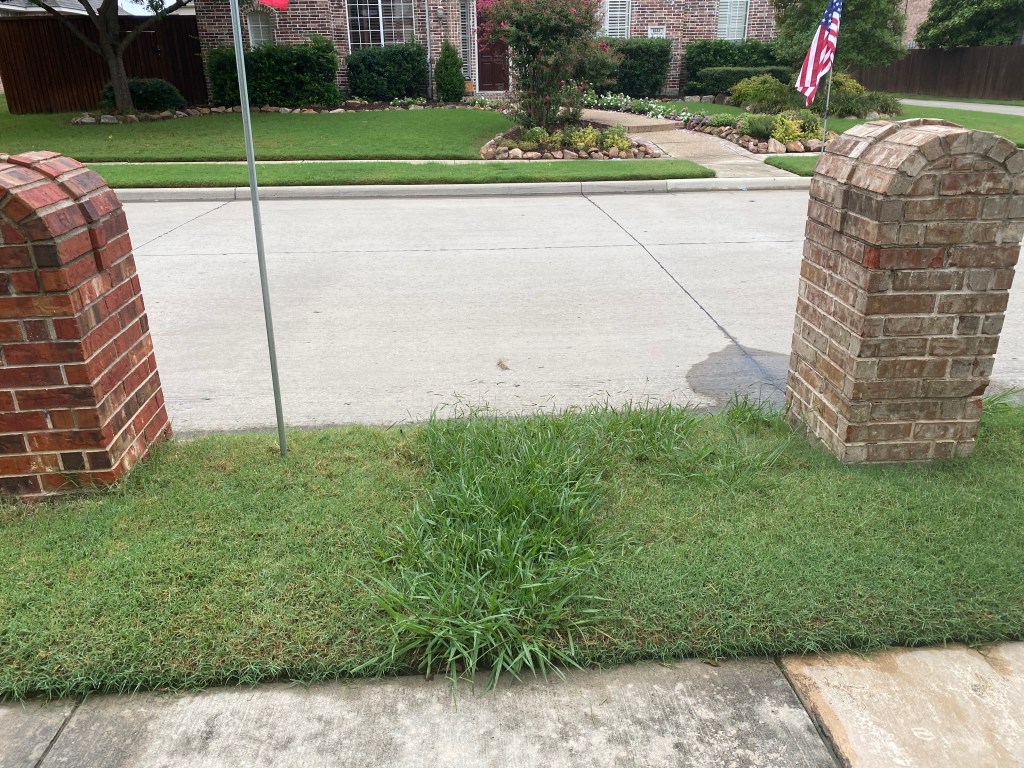
I noticed an unusual situation in my neighborhood during a walk the other day.  I discovered a fairly tall and unruly patch of weeds growing between two mailboxes.  These weeds appear to mark the property line between the neighbors.  Both of these yards are neatly mowed on either side of the weed patch.  Of course, my imagination started spinning stories about the potential root of this problem.  Perhaps there is a turf war in which neither party claims this particular piece of land.  Thus, the households will not cave in and mow the area because it’s not theirs to tend, resulting in a stalemate.  Do they frown and mutter every time they see the overgrowth?  

It could simply be an oversight.  Each neighbor assumed the other would fix the problem, but neither has acted yet.  Pulling out the equipment to mow one lousy spot could be too much trouble, so they’ll just wait until they mow next week.  They could even have a landscaping service who missed it and is contractually obligated to come back and mow the area.  Maybe they laugh over the ridiculousness of the terrain while they get their mail.  I’m curious, but these folks don’t live in the immediate vicinity of my house, and I don’t know them. I can’t simply ask what’s going on.  But whatever’s happening, the weeds remain untended.  

I wonder who will blink first.  It seems like a silly dilemma in some ways.  Can’t someone just mow the overgrown spot?  My first thought is that the bigger person should simply step up and take care of the situation.  But in other ways, I understand the conflict.  I will walk right past a pair of socks in my living room floor several times as my anger flares because I think “why won’t anyone else pick up around here?”  None of us want to be taken advantage of by others or feel unappreciated.  If we volunteer to help or take care of the problem, others might come to expect that of us every time.  Those types of constant expectations can lead to resentment and burnout.  I’ve felt it sometimes, and I’ve definitely seen it happen to other people, especially in volunteer situations, church in particular.  

So, then how can we approach these types of situations in which it might be easy to act, but we don’t want to be stuck in a role that might not be one we want?   Maybe we could offer to do part of the work, but then ask for help in completing the job.  Some of us resist asking for assistance.  We often want people to read our minds and then offer to lend a hand.  But that’s not really how life works.  Many people focus on their own needs to the point that they don’t notice the issues around them, or they simply aren’t that observant.  But if they’re asked to do something, they would willingly help.  Perhaps they would even feel included and valued if we ask them to contribute.  

God wants us to work together in community.  Not even Jesus did all the work by himself.  He had twelve disciples who helped him in his ministry, fished when they were hungry, helped with the crowds, and did what Jesus asked them to do.  And while they worked, they also spent time eating, talking, and in fellowship.  They shared the work and also solidified their friendships.                       

The next time we see a situation that needs our help, let’s figure out what we will offer and who we will ask to help us.  Maybe we can mow the patch this week and our friend can mow it the next.  Or we can mow half and they will mow the other half.  But if we work together, we can make progress on the issue in front of us without feeling overburdened.  We can share the obligation and create a bond with the one who is working with us.  And, we can please God at the same time.  

P.S.      Someone mowed the weeds a week later – thanks be to God. 

Accepting the Tears

Standard

I’d thought about what I wanted to say, but I hadn’t anticipated the emotions that would bubble up when I tried to speak.  Summer was ending, and even though our family would see most of this group of friends again soon, we wouldn’t see them on an almost daily basis as we had for the last few months.  I wanted to tell one friend in particular with whom we’d become close that he was special to our family and would always be welcome in our home.  But I suddenly felt sad and overwhelmed.  And, then the tears started to come.  

“We’ll see each other next weekend,” our friend said reassuringly.  I knew what he said was true, but I couldn’t help crying because things were changing just the same.  Riley, my sixteen-year-old daughter, persuaded me to join her in the restroom.  “I don’t know why I’m crying,” I told her.  “I feel so stupid.”  I worried that I’d embarrassed her and myself at the same time.  “Mom, stop,” she said.  But then she refined her words, “I don’t mean stop crying.  It’s okay to cry.  I mean stop being mad at yourself for being upset.”  

As my tears continued to flow, we returned to the group and took some photos before I left the gathering.  Riley stayed behind for a little while longer.  I cried all the way home.  I cried with sadness because I wasn’t sure how the future with these friends would play out, but I also cried with gratitude for the friendships we’d made.  Thankfully, Riley allowed me to focus on the root of my emotions instead of the shame and guilt that came from displaying my emotions.     

How many times do we apologize for crying?  We say, “I’m sorry,” for our inability to control our tears.  So, in the midst of sadness, grief, or even joy, we spend at least part of our energy feeling ashamed and trying to stop the tears as well.  Our emotions become a tangled mess.  I’ve heard experts say we must work through our feelings instead of ignoring or pushing them down.  But we can’t focus on dealing with the underlying emotions causing the tears when we’re also feeling guilt at crying in the first place.     

I know we don’t want to make others uncomfortable when we cry in front of them.  We usually desire to stop our own tears and those of others as quickly as possible.  But I think most people want to help and only feel awkward because they don’t know the best way to provide comfort.  Perhaps one way to help both the person in tears and the one bearing witness is if we agree that the goal is not necessarily to stop crying.  Often, we’ve internalized our culture’s cues that crying signifies weakness. But demonstrations of emotion in and of themselves are not necessarily bad. 

In the Psalms, David often expressed his anguish and distress to the Lord.  He freely poured out his heart to God and asked for help.  David wrote, “I am worn out from my groaning.  All night long I flood my bed with weeping and drench my couch with tears.  My eyes grow weak with sorrow; they fail because of all my foes. Away from me, all you who do evil, for the Lord has heard my weeping. The Lord has heard my cry for mercy; the Lord accepts my prayer.” Psalm 6:6-9.  David is honest about his emotions and his exhaustive tears.  Then, he says that the Lord “accepts” his prayer.  God welcomes and accepts our prayers and our weeping.  Perhaps we should better accept our tears as proof of our humanity, and not a reason for shame.  Maybe, we should accept tears as proof of God’s divinity – a God designed way to release our emotions and to show others that we need a listening ear, a comforting embrace, a shoulder to cry on.  

I struggled a little bit in the days after my crying episode.  I still felt somewhat embarrassed, but Riley remained vigilant in her insistence that my crying was okay.  I asked her to text our friend and thank him for his kindness when I was tearful.  While he confessed that he didn’t know quite what to do in that moment, his and Riley’s choice to accept my tears without judgment meant so much to me.  Instead of trying to make me stop crying, they both looked directly into my eyes and offered words of comfort, so that I could freely express my emotions and my heart.