Tag Archives: Jesus

Stirring the Spirit

Standard

Our church’s incredible worship leader Regina is moving back to her hometown of Kansas City, and this past Sunday was her last with us. Regina brought a gospel feel to our worship and a kind and warm personality. As we hugged and said that we loved each other, I told her that she’d brought a wonderful spirit to our church. She said that the Spirit was already at our church when she’d arrived. She suggested that perhaps in her role, she’d helped stir the Spirit. And with that, she gave me a last gift to ponder: what if the Spirit is present always, and we need to help stir it up? 

In church lingo, we pray for the Holy Spirit to come to us, to stir our churches, our people, to bring about change, to move on our behalf. I admit that this has caused a struggle for me at times. Is the Spirit with us all the time or does it only visit occasionally? Or is it both? Or do we even have a clue how the Spirit works? I admit that I don’t know. Before Jesus is born, the Spirit shows up for Mary, her cousin Elizabeth, and Elizabeth’s husband Zechariah (Luke 1). Before Jesus is crucified, he tells his people, “But the Advocate, the Holy Spirit, whom the Father will send in my name, will teach you all things and will remind you of everything I have said to you.” (John 14:26). Sometimes, we say that God is the Creator; Jesus, the Son, is the Redeemer, and the Spirit is the Sustainer. 

I personally like the idea that the Spirit is always with us, as helper and sustainer. I also think of the Spirit as portraying the feminine elements of the Godhead. I don’t have all the research at hand to back me up, but I know I’m not alone based on some of the seminary classes I’ve taken. In fact, in my first seminary class when the professor called the Spirit “she,” I knew I was in the right place. And just like most women, I think the Spirit is working behind the scenes always. 

Whether we think of the Spirit as male, female, or neutral doesn’t change the fact that I believe the Spirit can be an active participant in our lives. That if we invite the Spirit to be involved in our lives, we open our minds and hearts to see how the Spirit is and can be at work. Maybe the Spirit is the source of “good trouble” at times. If we assume that the Spirit is present, then perhaps our task is to ask how the Spirit would like us to help. If the Spirit is always brewing something, then maybe our job is to take turns stirring in the way the Spirit guides us. 

We don’t need to stir in the same way. Regina stirs by singing and playing in a way that moves people. I try by using words and giving hugs when I greet at church. Some of us may teach children; some of us may be activists that stand up boldly for their communities; some of us may take a meal to someone who is home bound. I believe the Spirit is up to something all the time and in all sorts of ways. And that the Spirit wants us to help. Maybe stirring the pot can be a good thing after all.   

Trust Me?

Standard

In the book “One Word That Will Change Your Life,” authors Jon Gordon, Dan Britton, and Jimmy Page promote the strategy of choosing one word that becomes the focus of a person’s year instead of creating a bunch of wordy resolutions that we’ll forget by the end of January. My friend Lanna is dedicated to discovering a word of the year that frames her mindset for the upcoming year. So, when I decided that the youth group should engage in this one-word project, I asked Lanna to lead the discussion. She agreed and then asked, “what’s your word?” I hadn’t picked a word at that point even though the new year had already started, but now I needed to go through the process of finding my word if I was asking the youth to do the same. I read the above-mentioned book – the copy that Lanna gave me last year – and set out to find my word. 

I admit I was a bit skeptical because while I’d picked words in some years past, I hadn’t gone through the process of looking in, looking up, and looking out described in the book. The authors noted that sometimes the word will come to you quickly and at other times the word reveals itself with a bit of time. I thought my word would emerge gently and slowly. But suddenly, the word “trust” came to me like a bolt of lightning. My next thought was no thank you

I didn’t want trust to be my word because I have some trust issues. Whenever I see a tv show or movie in which one character asks another, “do you trust me?” my automatic thought is no. Obviously the question is not intended for me, the viewer, but no is what I think. On the Enneagram personality type, I’m a six. After the word trust came to mind, I saw a social media post by an Enneagram expert (@enneagramexplained) that had each of the nine types’ responses to “Driving in the Snow.” When confronted with driving in the snow, a type six says, “Nope, I either don’t trust myself or I don’t trust everyone else!”  Another Enneagram social media post (enneagramwithhjb) says sixes are “looking for someone they can trust.” We sixes are loyal once we trust someone. It’s just hard for us to get there. I don’t trust the process or the journey easily. I don’t trust myself, and I struggle to trust God too. 

To me, trust implies lack of control and that scares me. But when I looked up the definition of trust, I read “assured reliance on the character, ability, strength, or truth of someone or something” (merriam-webster.com). Trust isn’t based on blind faith but built on a strong foundation that I already have with someone or something. I don’t have to trust everyone (not that that would ever happen), and if I have trusted someone, I can change my mind if they prove themselves untrustworthy. I can trust myself more than I have in the past because I know how much time and effort I put into making decisions. I can trust God more because I can rely on God’s character.    

Perhaps instead of letting the word trust terrify me, I can view it as becoming more content with who and where I am. Now that I have my word, I’ll spend this year learning about trust and about myself in the process. Trust me. 

The Hope of Mary

Standard


During the season of Advent, we wait in anticipation for the arrival of Christmas. Weremember with hope, peace, joy, and love that Jesus was born long ago and that he still brings light to the world today. But hope has been a little harder to come by this year. We haven’t had as many things to anticipate, to look forward to, to get excited about. So many events have been canceled, and planning is virtually impossible. The spread of Covid-19 has created fear and anxiety and has dimmed our hope.

We have such abundant hope about Christmas, in part, because we know what happened. We know the familiar story around Jesus’ birth with angels, shepherds, wise men, and a star. The savior of humanity came into the world that night.

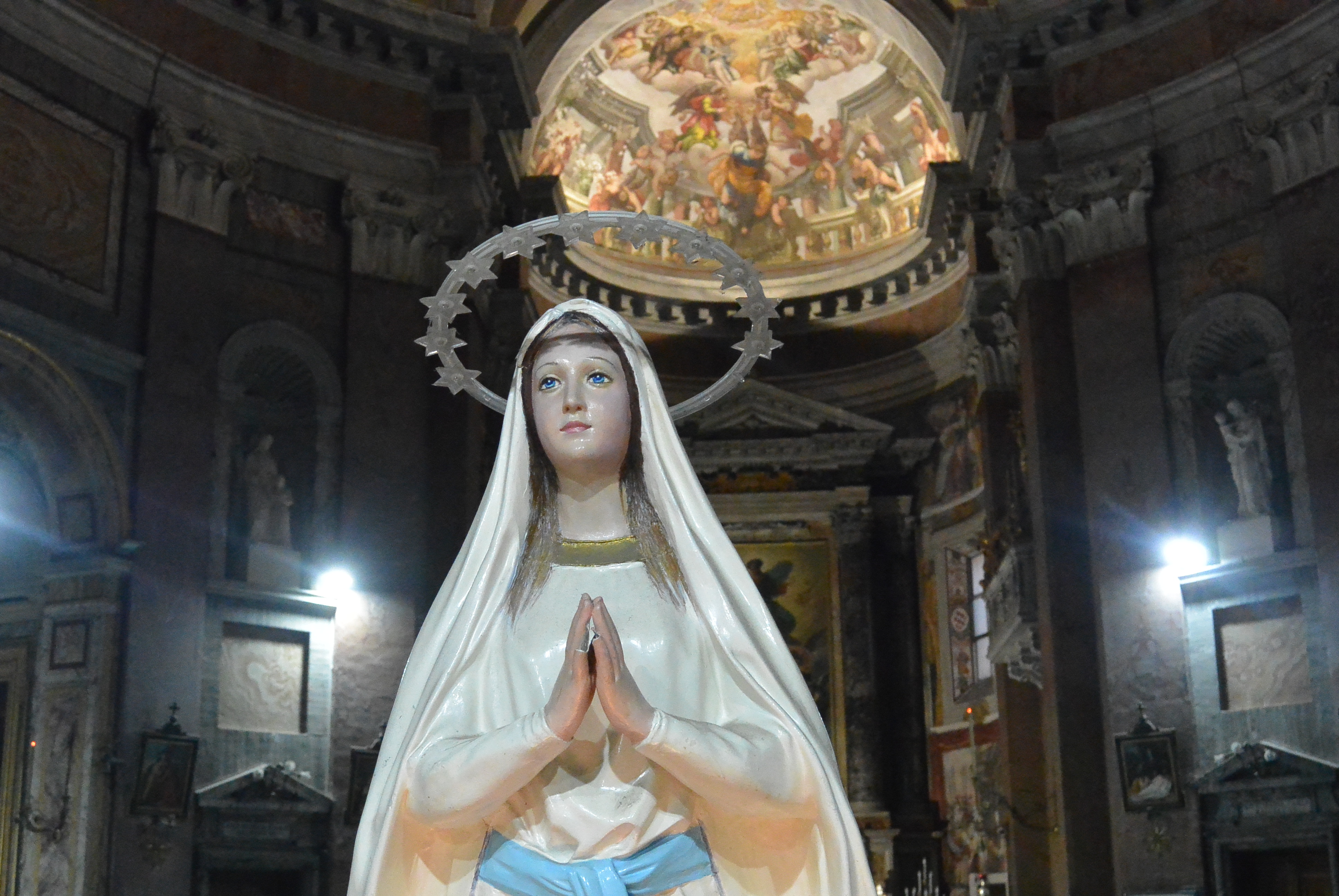
But I’ve been thinking a lot about Jesus’ mother Mary. Mary didn’t know exactly how everything would play out. Honestly, she didn’t have many details. The angel Gabriel told her that the Holy Spirit would cause her to conceive a son who would reign over a kingdom that would never end. Gabriel said, “So the holy one to be born will be called the Son of God.” Luke 1:35 (NIV).

With all of the unknowns, I wonder about Mary’s hopes and dreams. Maybe she simply hoped to survive childbirth. Perhaps her hopes centered around having a healthy baby. I’m sure she hoped to be a good mother. She probably hoped that this crazy situation, becoming the mother of a savior, would work out well in daily life. I bet she wasn’t making plans for how Jesus would eventually become a leader but was more focused on the family she was creating, the baby she would raise with Joseph.

Mary lived with uncertainty and probably a good deal of fear as she waited for the birth of Jesus. Even though Mary did not know the future, she said, “My soul glorifies the Lord and my spirit rejoices in God my Savior, for he has been mindful of the humble state of his servant.” Luke 1:46-48 (NIV). Before she knew whether her hopes would come to fruition or not, she praised God and expressed her gratitude because God had her in mind. She believed that God cared about her while still living in the unknown.

This year we should take a lesson from Mary in how to have hope in the face of the unknown. Mary tied her hope to the fact that God had her on his mind. Mary found favor with God in an extraordinary way. But could we also believe that we are on God’s mind? It’s hard to make that leap at times. We often feel insignificant and small. We don’t feel worthy.

But Mary didn’t see herself as holy or magnificent either. She said that God was mindful of “the humble state of his servant.” While she acknowledged that generations would call her blessed and we see her as God’s most blessed woman, she probably didn’t fully realize her significance until long after the birth of Jesus. But she based her hope on God’s love and mindfulness.

God is mindful of us as well. The Psalmist said, “The Lord has been mindful of us; he will bless us.” Psalm 115:12 (NRSV). How would things change if we had confidence that God is mindful of us? Mary faced many uncertainties and so do we. Let us rest assured that God is mindful of us, and we can place our hope in God.