
Tag Archives: Parenting

What We Don’t Know

Standard

Every parent and child have faced this situation: the child says they don’t like a particular food but when the parent asks if the kid has tried it, the answer is no. And almost every parent says something to the effect of “you don’t know if you like it or not until you’ve tried it.” What happens next runs the gambit. Some parents will attempt to entice their child to taste the food in question while some will give up based on previous episodes. But almost every parent would stand firm that the child can’t form an opinion without experiencing it.  

I thought about this common experience after I watched the Super Bowl halftime show this year. The artist Usher took the stage, and I quickly realized that I didn’t know as many of his songs as I thought. I appreciated his dancing, high energy, and showmanship, but I acknowledged that I probably didn’t appreciate it as much as I would’ve if I’d known more of his music. After the performance, I was surprised by the vast differences in the reactions to his performance on social media platforms. Usher’s fans loved his performance and hailed it as one of the best Super Bowl halftimes ever. Other people said how much they hated his performance. But I noticed that none of the people who disliked his show said they were huge Usher fans but were disappointed by how he performed. I think they were like me and didn’t know much about Usher’s repertoire. Instead of admitting they didn’t know his music though, they said his performance was awful. Sounded a lot to me like the kids who say they don’t like something because they haven’t experienced it.    

I think we do this a lot with respect to artist’s performances, yes, but also in a lot of other contexts. We say we don’t like something when we have not experienced it. We say we don’t like something when we haven’t made any effort to learn about it. Worse yet, we say we don’t like someone or a group of people without trying to understand who they are and what they’ve gone through. We don’t listen to their stories. We feel fearful or threatened based on our assumptions, not informed decisions. 

Instead of jumping to the conclusion that we don’t like someone or something, what would happen if we took a step back and analyzed whether we actually understand the person or subject well enough to make that assessment? It seems like such a simple thing that we expect children to understand the concept. I think we might find that we don’t have enough knowledge to make judgments about many of the ideas and groups that we so easily dismiss as unlikable, undesirable, or undeserving. We might take a breath before we speak out. We might wait a beat and wonder why others have different takes on the subjects and people we disregard. 

I’m convinced that acknowledging we might not know enough before we make a judgment could make a difference in how we approach people and subjects. If we stopped and analyzed our own knowledge, the initial heat of our snap convictions might dissipate. Maybe we could view others through a different lens. Saying I haven’t shared that experience, so I need to know more before I form an opinion is a valid and worthy response. More intellectually honest, with more emotional depth, and more open to the humanity that is in all of us. 
Twenty Years a Parent

Standard

Several of our friends have recently welcomed babies into their lives. A couple of them are brand new grandparents. Others are younger couples experiencing parenthood for the first time. Add to that my daughter Riley turning twenty years old this month, and I’ve found myself reflecting on parenthood quite a bit. If I’d been employed at a business for twenty years, I would get a plaque or paperweight in recognition. But as a parent, success is harder to determine. 

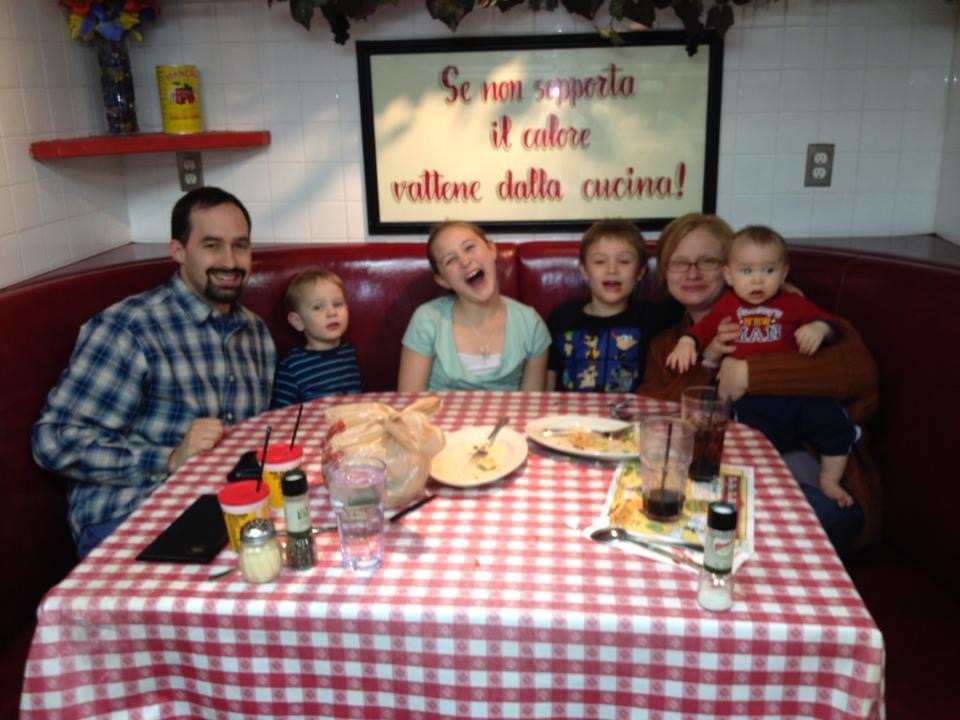
Twenty years is a long time to do one job. As in any role, I’ve learned a lot. I’ve changed a lot. And the position was very different than what I expected. If on day one of parenthood, someone had shown me who I’d be as a twenty-year parent, I would’ve been surprised and disbelieving for many reasons. Honestly, way back at the start, I thought my children would be a lot like me as a child: fairly docile, shy, and compliant. Anyone who knows my family knows that is not a description of any of my children. Instead, they’re fun, loud, and irreverent. They’re super smart and opinionated. They’re very different from one another and yet share many of the same familial traits. They’re kind and care about others. They are real, authentic, and genuinely themselves. For a minute on this journey, I tried to blame my husband Ben for one of the children’s stubborn behaviors. I thought I was paying for something he’d done in his childhood. Then, one day during that child’s rant about the unfairness of his world, I realized I was looking in a mirror. He’d inherited his need to rail against injustices from me. Ultimately, I wish I’d been more like them when I was younger. But I hope that my evolution as a person has benefited them. Becoming more flexible and open has allowed me to parent them in ways I couldn’t have foreseen twenty years ago. 

Not that it’s been easy to relinquish my controlling nature at times. Riley and I spent her entire junior year of high school at odds over who should be in charge of her life. I thought if she would just do what I told her to do, how I told her to do it, she could proceed with less heartache, less pain, more happiness. Ben continually reminded me that Riley was not me. That Riley was raised in a different time and place and that her experiences were not mine. I knew that intellectually. And yet, it was so hard for me to accept. My desire to protect her and keep her safe overwhelmed me and proved difficult to moderate. Both Riley and I learned so much that year about one another and how to be in relationship with each other as she matured and asserted her independence. I learned that I still had a role to play in her emotional and social development, but the way I went about it was important. My expectations about that stage of parenthood were idealistic and ultimately unrealistic, but we survived and have a deeper and more fulfilling relationship now. Adapting may not be easy for me, but when it comes to my kids, I’m determined to eventually find my way. 

It’s strange to think that when the newborns we know reach the age of twenty, Riley will be forty! And if I’ve learned anything, it’s that time really does feel like it goes by in the blink of an eye. I’m looking forward to the next twenty plus years and the privilege of watching my kids grow into the adults they will become. And I know that I’ll continue to change as well. I can’t wait.